What Does a Dental Insurance Specialist Do, and Do You Actually Need One? (June 2026)
Learn what dental insurance specialists do, average salaries, training requirements, and when your practice needs one. Updated June 2026 hiring guide.
Max Shore - July 6, 2026

If your practice is running smoothly until the moment someone asks about a pre-auth, a downgrade, or why their crown wasn't covered the way the front desk promised, you've already felt the gap. Dental insurance coordination falls into a weird zone where it's too detailed for the front desk to handle between appointments but not quite big enough to warrant a full hire until suddenly it is.
Whether you're a practice owner scanning dental insurance specialist jobs near Texas or California to write a job description, a candidate wondering how to become a dental insurance specialist and what the training looks like, or an office manager trying to decide between hiring a dental insurance verification specialist remote or keeping it in-house, the answer depends on volume, complexity, and whether your current team can actually keep up.
Let's break down what a dental insurance specialist does all day, what dental insurance coordinator salaries and hourly pay look like across different setups, and when the role stops being optional and starts paying for itself in recovered revenue.
TLDR:
- Dental insurance specialists verify coverage, submit claims, post EOBs, and handle appeals to get dental practices paid correctly.
- Average salary is $57,372 per year, ranging from $38,500 to $90,000 depending on location and experience.
- You need CDT coding knowledge, PMS experience, and prior dental office work; no degree required.
- Practices with 250+ claims per month or aging AR over 15% should hire a dedicated specialist.
- Lassie automates EOB posting and payment reconciliation, reducing 80–100 monthly admin hours spent reconciling insurance payments by hand.
What Does a Dental Insurance Specialist Actually Do?
A dental insurance specialist sits between the practice, the patient, and the payer. The job is to ensure claims are paid correctly, on time, and with minimal back-and-forth.

Day to day, the work usually includes:
- Verifying patient eligibility and benefits before appointments
- Pre-authorizing procedures with carriers like Delta Dental, Aetna, Cigna, MetLife, and Guardian
- Submitting clean claims through Dentrix, Eaglesoft, or Open Dental
- Posting EOBs and payments line by line, applying contracted write-offs and adjustments with Lassie AI
- Matching deposits against bank statements
- Working on aging reports and resubmitting denied or underpaid claims
- Drafting appeals with narratives, X-rays, and chart notes
- Answering patient questions about coverage and balances
One wrong CDT code or missed downgrade can hold up a claim for weeks.
Dental Insurance Specialist vs. Coordinator vs. Billing Specialist: What's the Difference?
Titles in this corner of the dental world get used interchangeably, creating confusion for job seekers and practice owners writing job descriptions. The roles overlap, but they aren't identical.
| Role | Primary focus | Typical scope |
| Insurance coordinator | Patient-facing benefits and treatment plans | Verifies eligibility, explains coverage, and collects estimates |
| Billing specialist | Money in and money out | Submits claims, posts payments, and manages statements |
| Verification specialist | Pre-visit eligibility checks | Confirms coverage, frequencies, downgrades, and waiting periods |
| Insurance specialist | Full insurance lifecycle | Verification, billing, posting, and appeals |
In smaller practices, one person wears every hat. In DSOs, work is split across teams.
How Much Do Dental Insurance Specialists Make?
Pay varies by location, remote status, and the depth of the revenue cycle your role covers.
Per ZipRecruiter's salary data (as of June 2026), the average dental insurance specialist in the US earns $57,372 per year, with the 25th percentile at $38,500, the 75th percentile at $74,000, and top earners reaching around $90,000 annually.
Geography matters. State-by-state breakdowns put Washington at the top, with New York beating the national average by 9.4%. Texas and California sit mid-pack, though metros like LA, San Francisco, Houston, and Dallas skew higher due to cost of living and DSO density.
Remote roles often pay slightly less than in-office positions in high-cost cities, but offer flexibility and a wider employer pool.
What Skills and Qualifications Do You Need to Become a Dental Insurance Specialist?
Most employers start with a baseline: a high school diploma or GED, plus a few years in a clerical or front-desk role. A degree isn't required, but ZipRecruiter's role overview notes that prior dental office experience distinguishes entry-level applicants from those who are hireable.
Beyond the basics, hiring managers look for:
- Working knowledge of CDT codes, ICD-10, and common payer policies
- Hands-on experience with Dentrix, Eaglesoft, or Open Dental
- Comfort reading EOBs, fee schedules, and contracted write-offs
- Phone presence for calling payers and explaining balances to patients
- Attention to detail, since one transposed code can stall a claim
Bilingual candidates, especially Spanish speakers, tend to move faster through the pipeline.
How to Become a Dental Insurance Specialist: Training and Certification Paths
Most people fall into this role sideways. They start at the front desk, get handed a stack of EOBs, and learn by doing. On-the-job training remains the dominant approach, especially in single-location practices where the office manager mentors directly.
If you want a credential, four programs are worth your time:
- AADOM offers the FAADOM fellowship and insurance-focused coursework
- Dental Career Academy runs a Certified Dental Insurance Specialist program covering CDT coding, claims, and appeals
- Practicon and DentalCodeology publish coding workbooks updated annually for ADA code changes
- Udemy, Coursera, and LinkedIn Learning host shorter billing primers
Pair coursework with hands-on PMS time. Employers care more about claims you've actually worked than certificates on a wall.
Dental Insurance Specialist Jobs: In-Office, Remote, and Hybrid Opportunities
Remote postings have grown sharply since 2020. Carriers like MCNA Dental, Delta Dental, and Guardian routinely list work-from-home triage and CSR roles, while DSOs centralize billing teams in regional hubs serving dozens of locations.
What each setup typically looks like:
- In-office: $18 to $24 per hour, full PMS access, direct patient contact
- Hybrid: $20 to $27 per hour, two or three days on-site, common at multi-location practices
- Fully remote: $21 to $30 per hour, requires a HIPAA-compliant workspace, secure VPN, and usually two-plus years of prior in-office experience
Remote roles favor candidates who self-manage and document everything.
When Does a Dental Practice Actually Need a Dedicated Insurance Specialist?
There's no universal threshold, but four signals usually mean it's time to dedicate someone to insurance work full-time.
Consider hiring when you hit any of these:
- More than 250 claims per month (a widely used industry rule of thumb, or two-plus providers producing steadily
- Aging over 90 days creeping past 15% of total AR, is a widely cited benchmark in dental revenue cycle management
- Front desk staff are missing eligibility checks or skipping appeals to keep the schedule moving
- Insurance write-offs exceeding what your office manager can audit weekly
The math is simple. If a $55K specialist recovers an extra $80K in written-off claims and frees your front desk to book more treatment, the role pays for itself before year one closes.
In-House Insurance Specialist vs. Outsourcing to a Billing Company: Weighing Your Options
Once volume warrants dedicated insurance work, the next call is whether to hire or hand it off.
In-house wins when patient relationships drive collections and the front desk needs someone on-site. Outsourcing to a billing agency fits when claim volume swings unpredictably, turnover keeps gutting your billing seat, or you'd rather skip managing another W-2 employee. A third path is software-first automation: Lassie handles EOB posting, payment matching, and secondary claim filing without a human biller doing the work. It sits between the two — lower overhead than a full-service agency, higher accuracy than a rotating staff seat — and leaves your specialist free to work appeals, verifications, and patient-facing questions instead of keying line items.
Common Challenges Dental Insurance Specialists Face and How to Solve Them
Even seasoned specialists hit the same walls. The fix is usually a tighter process, not more hours.
- Denials and rejections: build a denial log by reason code, then attack the top three causes monthly instead of appealing one by one
- Shifting payer policies: subscribe to Delta Dental, Cigna, and MetLife provider bulletins, and assign one team member to summarize updates weekly
- Verification crunch: batch verifications 72 hours out using payer portals, reserving live calls for exceptions
- Coordination of benefits: document birthday rule and primary/secondary logic in a one-page workstation reference
- Difficult carrier reps: get a reference number on every call and escalate in writing when answers contradict the contract
How Lassie Automates What Dental Insurance Specialists Do Manually
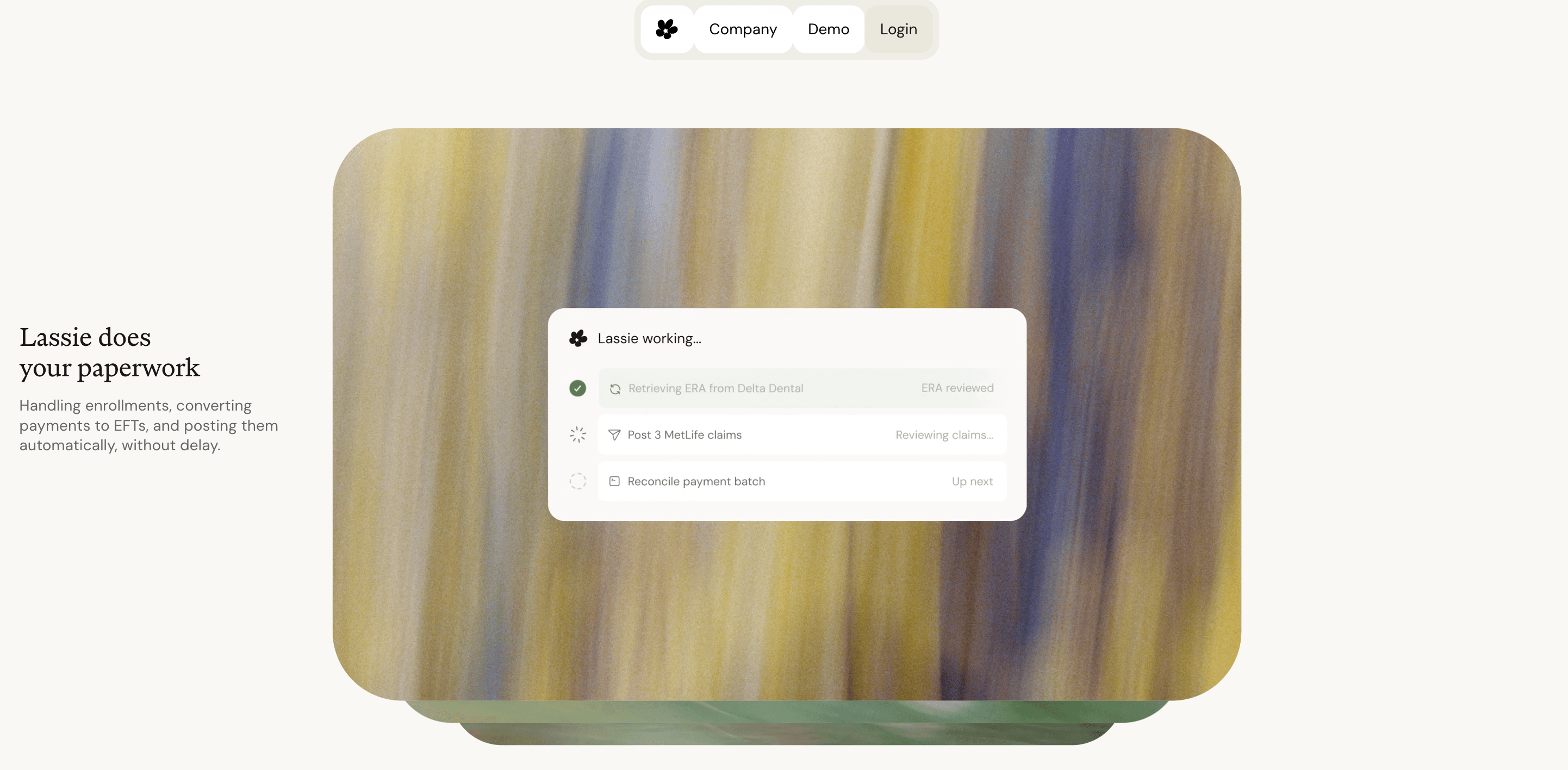
Most of the work above lives downstream of the claim: posting EOBs, reconciling deposits, catching short-pays. That's exactly the slice we automate at Lassie, subject to our services agreement.
Based on Lassie's own customer data, practices typically spend 80 to 100 hours a month reconciling insurance payments by hand, adding up to $100K to $200K a year in admin costs, while reimbursements take 30 or more days to land on average. Beyond posting, Lassie now automatically files secondary insurance claims after primary insurance processes a claim, and generates patient statements for remaining balances after insurance processing completes — so the revenue cycle keeps moving without manual intervention at either handoff. Practices using Lassie see an average of 4 to 7 percent more revenue per month after going live, a net gain that more than offsets the platform's usage-based fee.
Final Thoughts on Dental Insurance Careers and Hiring
This role sits at the center of practice profitability, but most people stumble into it instead of planning for it. If you're a practice owner, hire before your aging report forces your hand. If you're job hunting, focus on hands-on PMS experience and bilingual skills to stand out. The demand is real, the pay is climbing, and remote work has opened up options that didn't exist five years ago.
Your insurance person stops keying line items and starts working appeals, verifications, and edge cases. Book a demo to see how much time your practice can save.
FAQ
How much does a dental insurance coordinator make in California vs Texas?
California dental insurance coordinators earn roughly $57,000 to $65,000 annually, while Texas positions typically pay $50,000 to $58,000. Metro areas like San Francisco and LA pay more due to the cost of living, but remote roles from either state often level the playing field.
Can you become a dental insurance specialist without prior dental office experience?
Most employers require 1-2 years of dental or medical front desk work before hiring for insurance-specific roles. A high school diploma plus hands-on PMS experience with Dentrix, Eaglesoft, or Open Dental makes you hireable; a certification alone rarely does.
What's the fastest way to learn dental insurance billing if you're already working at the front desk?
Shadow your current billing person for 30 days while they post EOBs and work aging reports, then request access to your PMS training mode to practice claim entry and payment posting yourself. Pair this with a coding workbook from DentalCodeology or Practicon to learn CDT codes in context.
Dental insurance specialist vs billing agency: which costs less for a two-provider practice?
A full-time in-house specialist costs $45K to $75K per year, including benefits, while outsourcing to a billing agency runs 2% to 5% of collections, typically $30K to $70K annually, for a practice collecting $1.5M. In-house wins if you value direct oversight and patient context; outsourcing fits if you want to avoid turnover and W-2 management.
Should I hire a dental insurance verification specialist or automate it with software?
If you're running fewer than 200 appointments per month and already have front desk staff batch-verifying 72 hours out, keep it manual. Above 300 appointments or if aging over 90 days exceeds 15% of AR, dedicate a specialist or layer in automation to catch eligibility gaps before claims go out.