How to Verify Dental Insurance Before Every Appointment Without Wasting an Hour (June 2026)
Learn how to verify dental insurance before every appointment in under one minute. Stop wasting hours on hold and cut verification time by 90%. June 2026 guide.
Max Shore - July 6, 2026
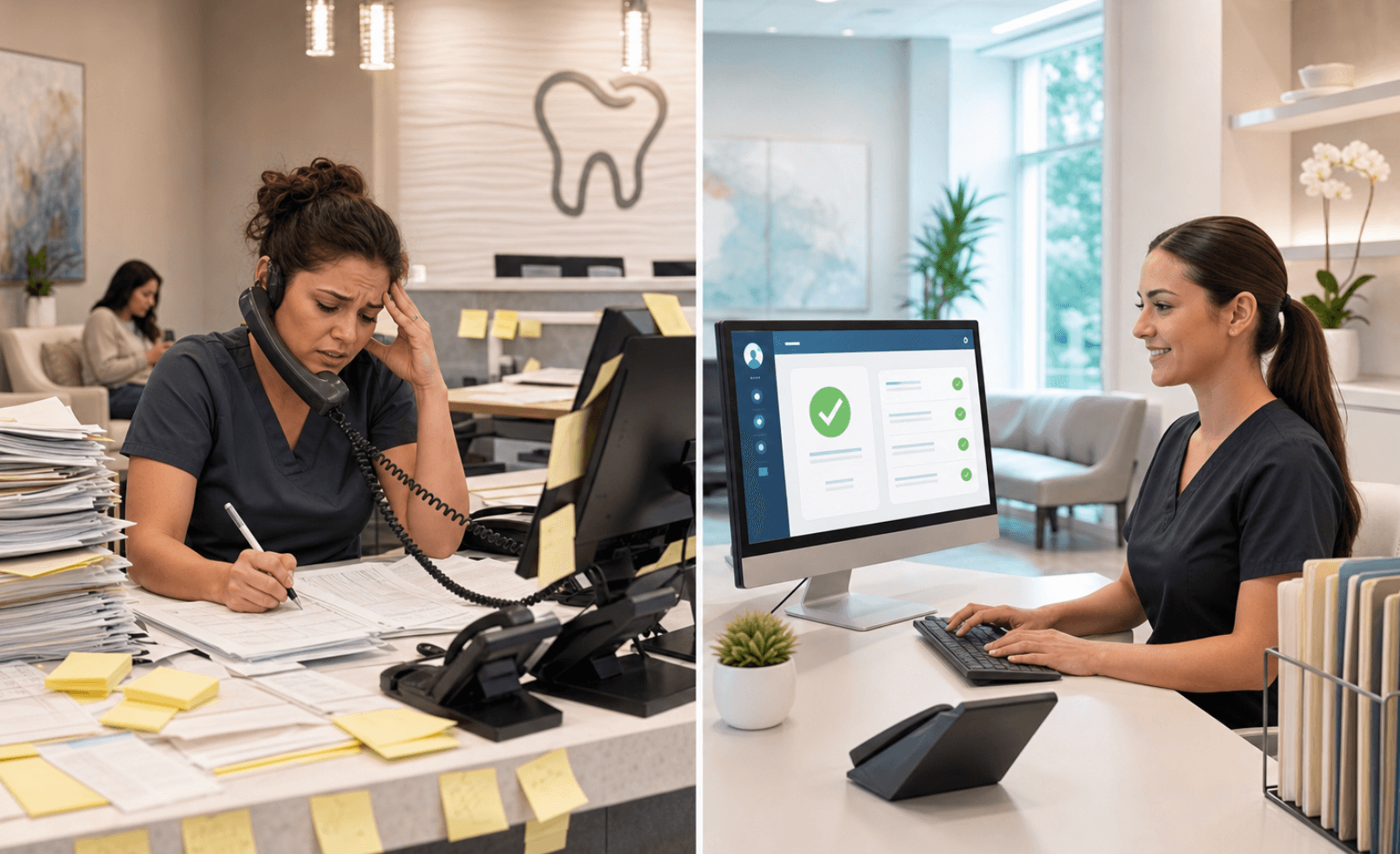
You pick up the phone to verify dental insurance, work through a ten-minute IVR maze, authenticate with member ID and date of birth, hold for a benefits specialist, get transferred, re-authenticate, hold again, and finally copy down percentages and frequency caps before the call drops. One patient burns for fifteen to thirty minutes. Twenty-five appointments a day means your front desk spends half the week on hold instead of scheduling or answering patient questions.
The traditional verify dental insurance phone number workflow doesn't scale, and logging into portals to verify dental insurance online still leaves gaps when frequency histories or downgrades hide behind a second login. The faster path is knowing what breaks in manual dental insurance verification, which parts automated dental insurance verification software and dental insurance verification AI can pull in under a minute, and when dental insurance verification companies or dental insurance verification outsourcing cover the edges.
TLDR:
- Manual verification takes 5 to 30 minutes per patient and burns 6 to 12 hours daily in a 25-patient practice.
- 15% of claims are denied due to verification errors, such as outdated member IDs and missed frequency limits.
- Automated software cuts verification time from 13 minutes to under one minute and costs from $10.60 to $0.30 per check.
- You need to re-verify every returning patient before each visit to catch mid-year coverage changes and terminations.
- Lassie automates EOB retrieval and payment posting after claims are paid, saving practices 80-100 hours per month.
What Is Dental Insurance Verification and Why Does It Matter
Dental insurance verification confirms a patient's active coverage, benefit limits, and out-of-pocket responsibility before they sit in the chair. It happens between scheduling and the appointment, setting the financial baseline for the treatment estimate, the claim, and the patient invoice.
A proper verification pulls a specific set of details from the payer:
- Active policy status and effective dates
- Annual maximum and remaining balance
- Deductible amount and how much has been met
- Coverage percentages by category (preventive, basic, major)
- Frequency limitations on cleanings, X-rays, and fluoride
- Waiting periods, missing tooth clauses, and downgrades
- In-network versus out-of-network status
- Coordination of benefits if secondary coverage exists
Skip a detail and the practice eats the gap: surprise bills, denied claims, weeks of chasing money owed.
How Long Does Manual Dental Insurance Verification Actually Take
The time math is brutal. According to Curve Dental, a single manual verification runs 5 to 30 minutes per patient, depending on whether the payer offers a usable portal or forces a phone call.
Phone verifications are at the bottom. Calls regularly stretch 15 to 30 minutes, and one attempt rarely closes the loop. Reps put you on hold, transfer to a benefits specialist, then drop the line. You call back, fight the IVR, and re-authenticate.
A practice scheduling 25 patients a day faces 6 to 12 hours of verification work daily. That is one full-time role buried in hold music and portal logins.
The Complete Dental Insurance Verification Checklist
Use this as the working checklist your front desk runs through before every appointment. It groups items by what trips up claims most often, per ADA eligibility verification guidance.
Patient and policy identifiers
- Patient's legal name, date of birth, and relationship to subscriber
- Subscriber name, date of birth, and member ID
- Group number, employer, and plan type (PPO, HMO, indemnity, Medicaid)
- Payer name, claims mailing information, and electronic payer ID
Eligibility and plan structure
- Effective and termination dates
- Calendar year versus benefit year reset
- Individual versus family deductible status
- Annual maximum, remaining balance, and lifetime ortho max
Coverage by category
| Category | What to confirm |
| Preventive | Percentage, cleaning frequency, x-ray intervals, fluoride age cap |
| Basic | Fillings, extractions, endo percentages and downgrades |
| Major | Crowns, bridges, dentures, implants, lab fee handling |
| Ortho | Age limits, lifetime max, payment schedule |
Limitations that quietly deny claims
- Waiting periods on basic and major work
- Missing tooth clauses and replacement intervals
- Frequency caps on perio maintenance, SRP, and bitewings
- Pre-authorization requirements
- Coordination of benefits order and secondary payer details
Step-by-Step: How to Verify Dental Insurance (Traditional Process)
Run verification 72 to 48 hours before the appointment. That window gives you time to call back if a portal lags or a rep hangs up, but stays close enough to catch mid-month terminations.
- Collect details at scheduling: payer name, member ID, group number, subscriber DOB, and a clear photo of both sides of the card.
- Check the payer's online portal first. Delta, Cigna, Aetna, MetLife, and Guardian all have provider portals that return eligibility and a benefits breakdown in under five minutes.
- If the portal lacks frequency history or downgrades, call the provider line printed on the card.
- Document everything in the patient's PMS note, including the rep name, reference number, and date.
Common Dental Insurance Verification Errors That Cause Claim Denials
Roughly 15% of dental claims get denied, and most denials trace back to verification errors caught too late.
The same errors repeat across practices:
- Outdated member IDs after a plan year reset or employer change
- Missing frequency history, leading to a denied cleaning done four months too soon
- Skipped downgrades on composites, posterior crowns, and SRP
- Wrong COB order when a patient has dual coverage
- Ignored waiting periods on basic and major procedures for new hires
- Confusing calendar year benefits with benefit year benefits
Each miss denies the claim, surprises the patient with a balance, and forces hours of rebilling.
How Automated Dental Insurance Verification Software Works
Automated verification software pulls eligibility data straight from payer systems through clearinghouse connections and direct API calls, returning a structured benefits breakdown in seconds. No portal logins, no hold music, no rep transfers.
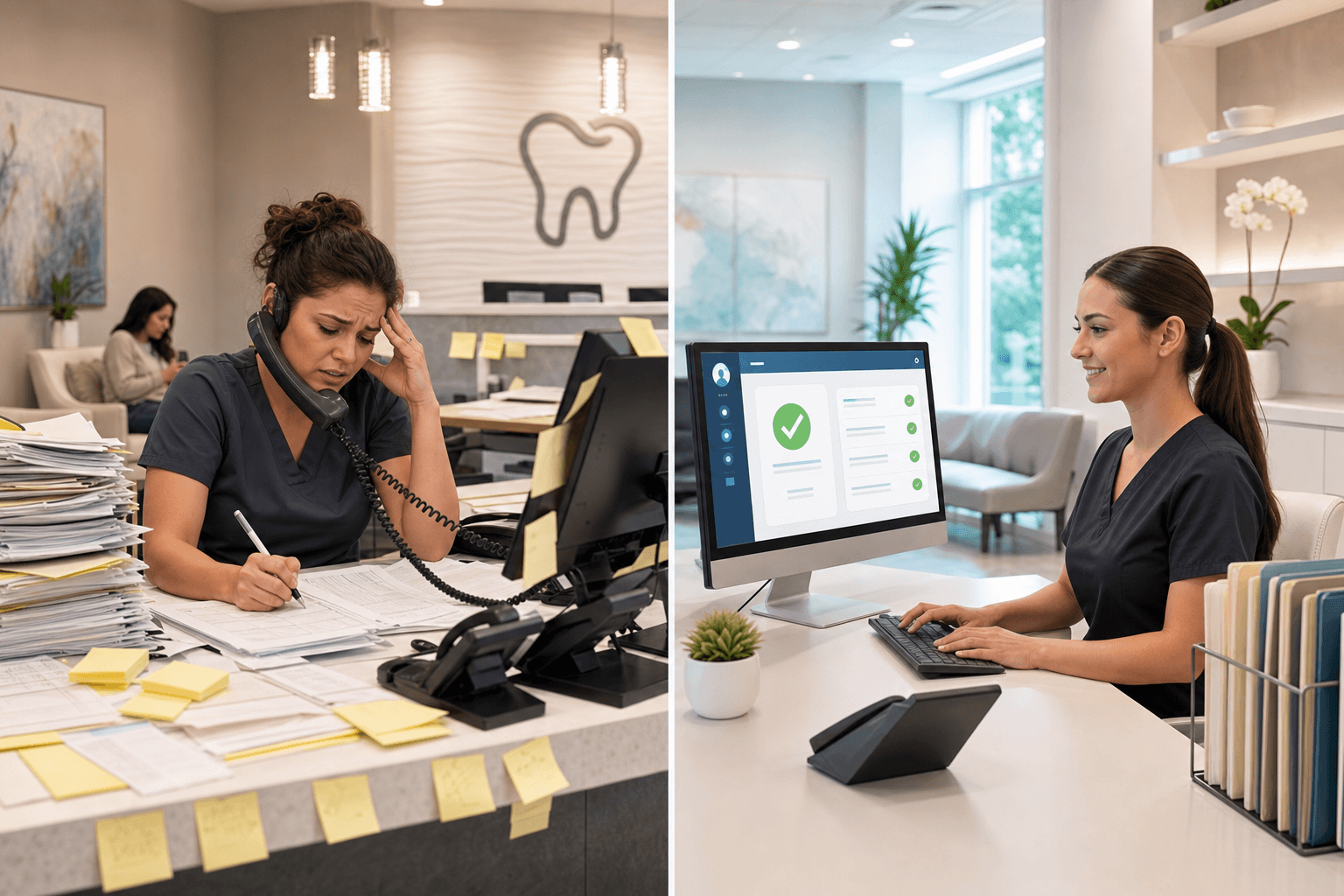
The cost and time delta is hard to ignore. Manual verification averages 13 minutes versus under one minute for automated retrieval, and per-transaction cost drops from $10.60 to around $0.30.
Under the hood, these systems do three things:
- Query payer eligibility endpoints in real time using the patient's member ID and DOB
- Parse responses into discrete fields (maximums, deductibles, frequencies, downgrades) and write them into the PMS patient record
- Log the verification with a timestamp and source reference for audit trails
Dental Insurance Verification for New vs. Returning Patients
New patients need the full pull. You have no plan history, no frequency log, and no downgrade pattern on file, so the front desk works through every line of the checklist above and confirms the card matches what the payer shows on its end.
Returning patients still need re-verification before every visit. Coverage changes mid-year more often than practices expect: open enrollment updates, job transitions, dependent changes, January plan resets, and mid-month terminations when an employer drops a carrier.
| Check | New patient | Returning patient |
| Full benefits breakdown | Every time | Annually or at plan change |
| Eligibility ping | Every time | Every appointment |
| Frequency history refresh | Every time | Before limited-frequency services |
| COB confirmation | Every time | On dependent or employer changes |
The eligibility ping is the non-negotiable. A 60-second status check catches a terminated policy before the patient sits down.
Outsourcing Dental Insurance Verification: When It Makes Sense
Outsourcing makes sense when in-house verification math stops working. It tends to pay off for:
- High patient volume (40+ daily visits), where front desk staff cannot keep up without dropping phone coverage
- Multi-location groups running inconsistent verification quality across sites
- Practices with chronic front desk turnover or unfilled admin roles
- Heavy PPO mix with frequency caps and downgrades that demand call-based confirmation
What verification companies actually deliver
Companies like eAssist, Wisdom Dental Billing, Dental Support Specialties, and DentalRevu staff remote billers who log into your PMS, run portal checks, place calls, and write a benefits breakdown 24 to 72 hours before the visit. Pricing typically runs $4 to $12 per verification.
Outsourcing versus software automation
Outsourcing buys labor; software removes it. Cost scales linearly with patient count when a human picks up the phone, and quality drifts with turnover. Verification software returns structured data in seconds at a fraction of per-transaction cost, but covers only what payer APIs expose. Practices with edge-heavy payer mixes often run both: software for 80% of routine pulls and a service for calls that require a human voice.
How Lassie Automates Insurance Payment Posting After Verification
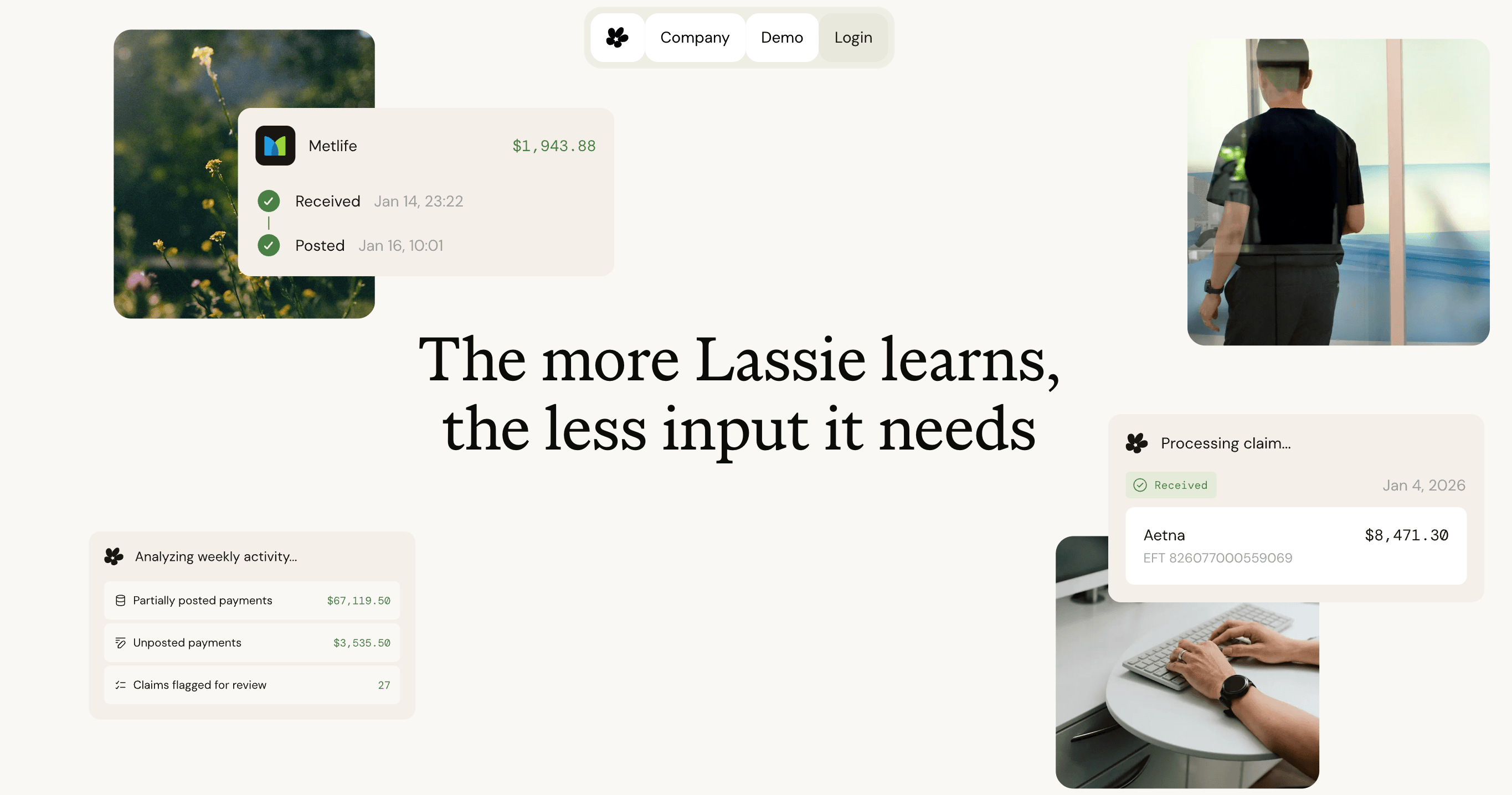
Verification handles the front of the insurance cycle. Posting handles the back. Once the claim is submitted and the payer cuts a check, someone still has to read the EOB, enter line-item payments, apply adjustments, and match totals against the bank deposit. That is the 80 to 100 hours per month most practices lose to manual posting work.
For the verification side, practices are actively using Toothy for AI-powered insurance verification as a complement to Lassie's EOB posting automation — covering the front-end eligibility layer that Lassie's back-end posting picks up from.
Lassie picks up there. Our AI retrieves EOBs from payers, reads them, and posts payments directly to Dentrix, Eaglesoft, or Open Dental, with the practice's posting rules applied. Adjustments, write-offs, and downgrades are routed according to the logic configured during onboarding. Bank deposit matching runs in real time, and anything ambiguous is flagged for human review before being posted blindly. All data handling meets HIPAA requirements under our business associate agreement. Insurance verification is also the most-requested feature from Lassie's customer base and is on the roadmap — so the full front-to-back insurance revenue cycle will eventually run in one place.
Final Thoughts on Improving Your Dental Insurance Verification Process
Most practices treat verification as a necessary burden, but it decides whether your claims pay clean or bounce back with errors. Manual verification ties up your front desk for hours every day, and missing one downgrade or frequency cap triggers a denial that takes weeks to fix. Automated software pulls most verifications in under a minute, and outsourcing steps in when you need a human on the phone with a difficult payer.
Book a demo to see how Lassie saves dental offices 80–100 hours per month on payment posting.
FAQ
What's the best way to verify dental insurance benefits before an appointment?
Start with the payer's online portal 48 to 72 hours before the visit. Most national carriers return eligibility, maximums, deductibles, and coverage percentages within 5 minutes. If the portal lacks frequency history or downgrades, call the provider line on the card and document the rep name, reference number, and date in your PMS.
Automated dental insurance verification software vs manual phone calls?
Automated software pulls eligibility data via clearinghouse connections in under 1 minute at roughly $0.30 per transaction, while manual phone verification takes 13 minutes at $10.60 per transaction. Software handles routine pulls instantly but covers only what payer APIs expose, so practices with complex payer mixes often run both: software for standard verifications and phone calls for edge cases requiring a human voice.
How long does dental insurance verification actually take per patient?
Manual verification runs 5 to 30 minutes per patient, depending on the payer. Phone verifications sit at the bottom—calls regularly run 15 to 30 minutes, with hold times, transfers, and dropped lines. A practice scheduling 25 patients daily faces 6 to 12 hours of verification work, which is one full-time role.
Can I outsource dental insurance verification instead of hiring more staff?
Yes, if your in-house verification math stops working. Outsourcing makes sense for high-volume practices (40+ daily visits), multi-location groups with inconsistent verification quality, or practices with chronic front desk turnover. Companies like eAssist and Wisdom staff remote billers who run portal checks and phone calls 24 to 72 hours before visits, typically charging $4 to $12 per verification.
How do I verify Delta Dental insurance coverage before a patient visit?
Log into Delta Dental's provider portal using your practice credentials, enter the patient's member ID and date of birth, then pull the eligibility response showing active coverage, annual maximum, remaining balance, deductible status, and coverage percentages by category. If frequency history or downgrades aren't visible in the portal, call the provider service line printed on the patient's card and request a full benefits breakdown.