Dental EOB Automation: How AI Is Eliminating Manual Payment Posting for Independent Practices (June 2026)
Learn how dental EOB automation uses AI to post 70-90% of payments automatically, reclaim 80-100 hours monthly, and unlock frozen cash at independent practices in June 2026.
Max Shore - July 2, 2026
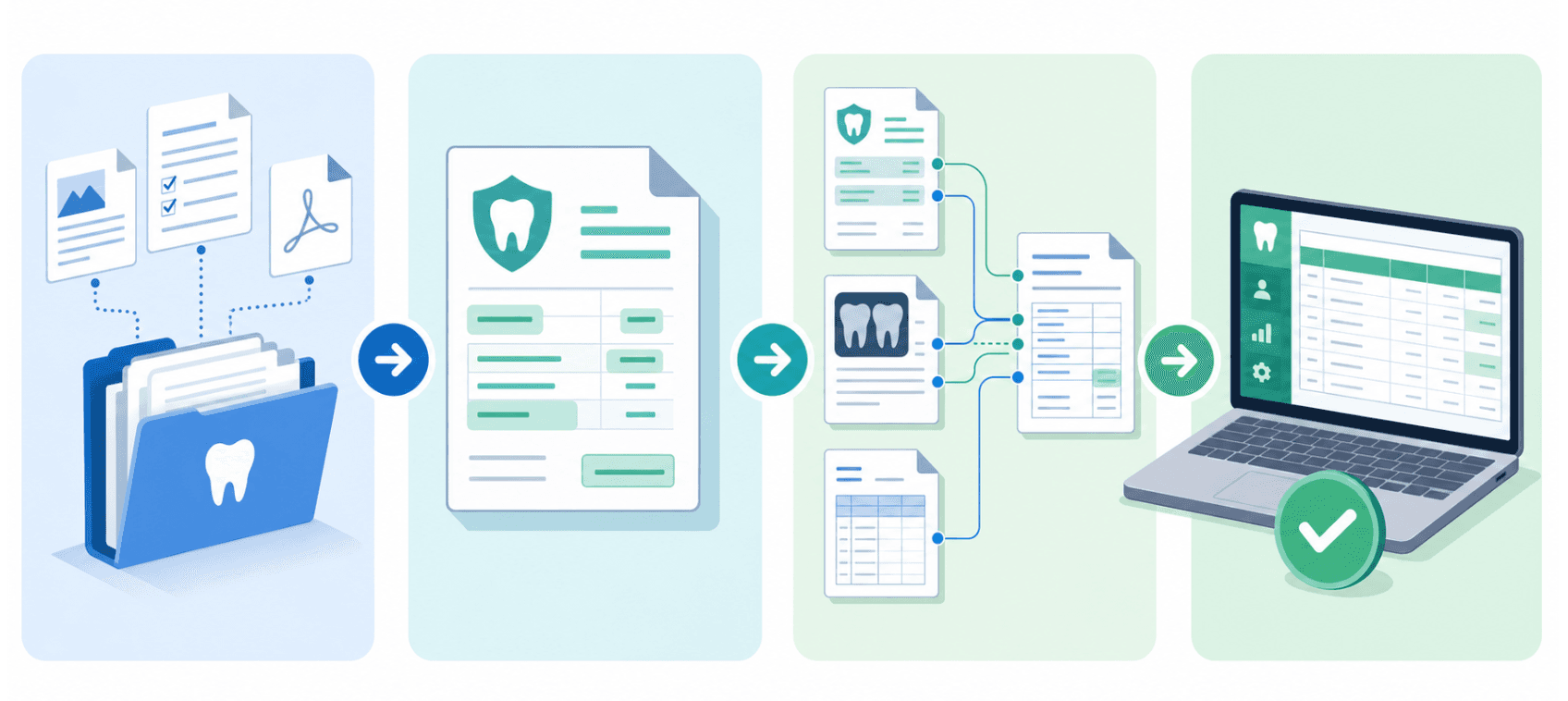
When your front desk asks how far behind you are on posting, the answer usually involves counting stacks of paper or scrolling through pending deposits. That gap between when insurance pays you and when the payment shows up in your PMS costs you working capital, hides aging denials, and burns staff time on data entry that could be spent on treatment coordination. Dental EOB automation closes that gap by automatically reading every EOB format, matching payments to claims in real time, and posting them to the correct patient ledgers, so you can see your actual cash position when you open the system.
TLDR:
- A five-day posting backlog freezes $13,000 to $17,000 in unusable cash at your practice.
- AI automation posts 70-90% of EOB line items without manual keying after rules are tuned.
- Manual posting consumes 80 to 100 hours monthly, while appeal windows expire unnoticed.
- Pure software vendors charge by usage; tech-backed billing services charge as a percentage of collections.
- Lassie posts EOBs across Dentrix, Eaglesoft, and Open Dental using AI, reclaiming posting hours.
What Is Dental EOB Automation and Why Independent Practices Are Adopting It Now
An Explanation of Benefits (EOB) is the document an insurance payer sends back after processing a claim. It details what was billed, approved, downgraded, what the patient owes, and which adjustments apply. Dental EOB automation uses software to read those documents, match them against open claims in the practice management system, and post payments to the correct patient ledgers without manual entry.
Three pieces of underlying tech make this possible:
- ERA ingestion: parsing 835 electronic remittance files that payers transmit directly, no paper involved.
- OCR and document understanding: reading scanned EOBs, paper checks, and PDFs that never arrived as structured data.
- AI claim matching: matching line items against submitted claims, fee schedules, and bank deposits, then applying posting rules.
Independent practices are adopting it now because the workflow is repetitive and rules-based, and it ties up staff on tasks that scale linearly with claim volume.
The True Cost of Manual Insurance Payment Posting
A five-day posting backlog at a practice billing $80,000 to $100,000 monthly leaves $13,000 to $17,000 in frozen cash between the bank and the ledger, based on Lassie's practice data. That money is earned, owed, and unusable until someone keys it in.

The cost compounds in three places:
- Working capital: cash that should cover rent or payroll sits in suspense instead.
- Appeal windows: most payers cap appeals at 90 to 180 days. Denials aging inside a backlog quietly expire past the deadline to fight them.
- Staff hours: Lassie's practice data shows 80 to 100 hours a month spent on posting at the front office wages, before counting rework on miskeyed entries.
A practice with steady claim volume can carry tens of thousands in latent receivables at any moment, according to recent posting cycle analysis.
How AI EOB Automation Actually Works
The workflow runs in four stages, each handing structured data to the next.
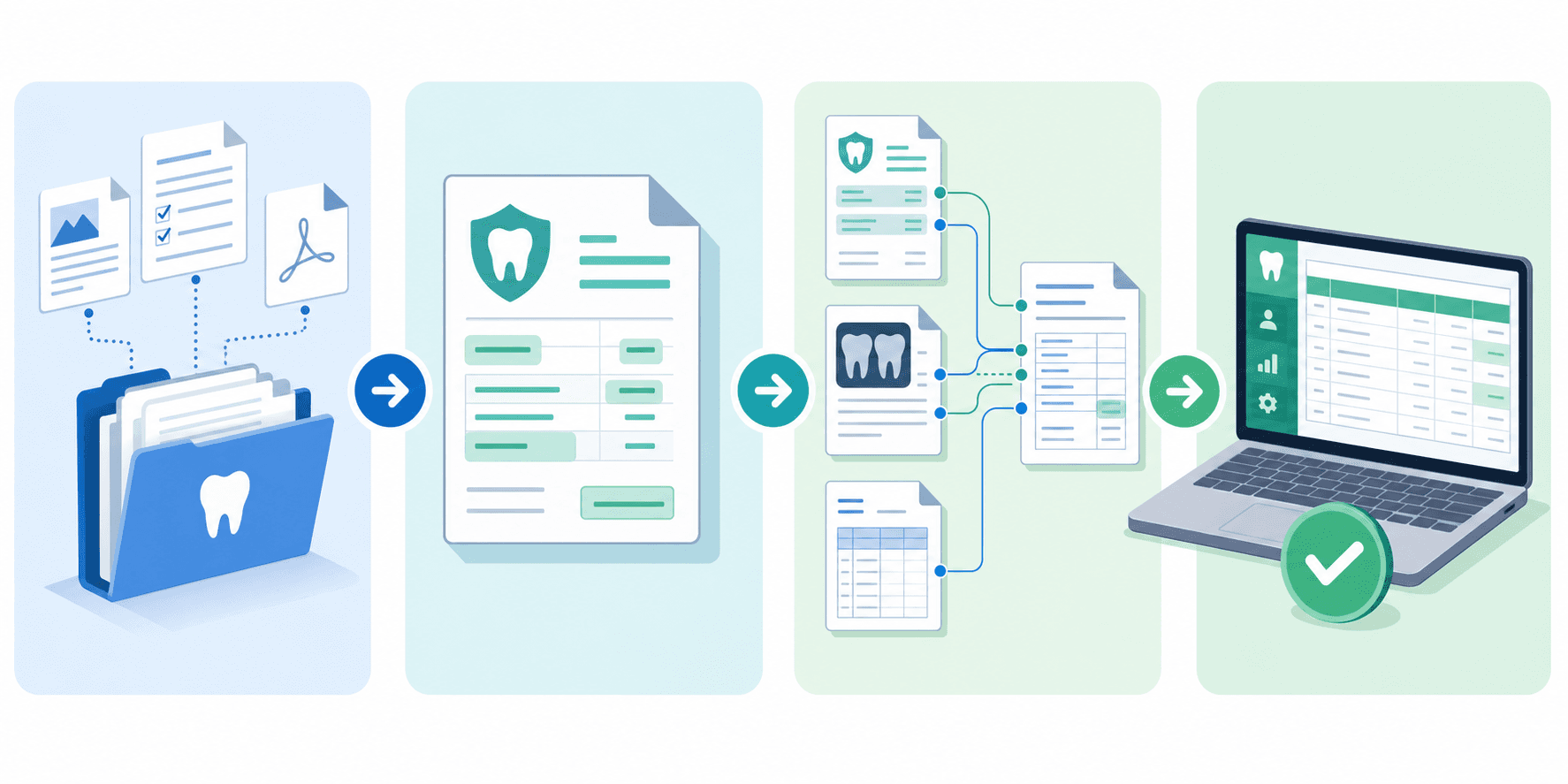
- Retrieval: the system logs into payer portals, pulls 835 ERA files, and ingests scanned EOBs or paper checks routed through a mailroom or bank lockbox. Bank feeds get pulled in parallel, so deposits and remittances arrive together.
- Extraction: Lassie's extraction layer, pulling subscriber IDs, procedure codes, billed amounts, allowed amounts, write-offs, and patient responsibility. Confidence scores attach to every field.
- Matching: line items are paired with open claims in the PMS using patient, date of service, and procedure code. Bank deposits tied to the EOBs that explain them, so the totals balance to the cent.
- Posting: practice-specific rules decide what writes off, what flags for review, and what posts straight through. Anything ambiguous routes to a human queue instead of being guessed.
What AI Can Post Automatically and What Still Requires Human Review
Honest automation isn't all-or-nothing. The bulk of routine remittances posts straight through, while edge cases get surfaced for a person to look at. Based on Lassie's practice data, 70 to 90 percent of line items clear without human touch once posting rules are tuned.
| Auto-posts cleanly | Flags for human review |
| Standard procedures matching the fee schedule | Unexpected downgrades or allowable mismatches |
| In-network write-offs against contracted rates | Disputed adjustments and unfamiliar reason codes |
| Patient responsibility under configured thresholds | Bundled or recoded procedures |
| Single-payer EOBs with matching deposits | Secondary insurance coordination gaps |
| Clean ERA 835 transmissions | Overpayments exceeding contracted amounts |
The straight read: automation eliminates keying labor on the predictable majority and triages the rest into a queue staff can actually work. Exceptions still need a human, but they arrive sorted with context attached, instead of buried in a stack of unprocessed mail.
Integration Requirements: Connecting Automation to Your Practice Management System
As more dental practices adopt AI tooling, the question isn't whether to automate. It's whether your current setup can receive what the automation writes back.
A few integration checkpoints determine that:
- PMS coverage: Dentrix, Eaglesoft, and Open Dental each expose data differently. Some tools write to the ledger via supported integration paths; others rely on RPA layers to drive the desktop UI.
- Sync cadence: real-time posting beats nightly batches if you want patient balances to be accurate when the front desk picks up the phone.
- Credential management: payer portal logins, bank feed credentials, and clearinghouse tokens belong in encrypted storage with rotation policies, not a shared spreadsheet.
- Handoff points: where software stops and a human picks up, need a defined queue inside the PMS, so exceptions don't drift.
If a vendor can't show you how each handoff works on your specific PMS, the deployment will leak labor back into the practice.
Choosing Between Full Automation and Tech-Backed Billing Services
The category looks crowded until you sort vendors by who actually performs the work. Pure software does the posting itself. Tech-backed billing agencies hire humans to do the posting, then wrap a dashboard around the team so buyers feel like they bought software.
The economics diverge from there:
- Labor-backed services are priced as a percentage of collections because cost scales with claim volume. More claims, more billers.
- Software-backed automation prices on usage because compute scales differently than headcount. Volume spikes don't trigger hiring rounds.
- Quality control differs, too. Humans make typos and turn over. Software fails predictably, so errors can be debugged and rules tightened.
Before choosing any vendor, ask one question: when an EOB arrives at 2 am on a Saturday, who or what reads it? If the answer is a person in another time zone, you're buying labor arbitrage with a login screen.
How Lassie Delivers AI-Native EOB Posting for Independent Practices
This is where I get to talk about what we built. Lassie posts EOBs across Dentrix, Eaglesoft, and Open Dental using AI, not offshore billers. Practice-specific rules handle adjustments, write-offs, and downgrades. Multi-location setups with separate tax IDs balance cleanly. Role-based access keeps staff out of bank data. Practices go live and start reclaiming 80 to 100 hours of posting work.
Final Thoughts on AI-Powered EOB Processing
The work is repetitive, the rules are consistent, and the volume keeps climbing. Dental EOB automation takes the keying off your plate, posts payments while you're closed, and surfaces the weird stuff for human review instead of burying it in a stack. Your staff gets their time back, your cash flow tightens up, and you stop losing appeals because claims aged out in a backlog. See how Lassie handles it for your practice, book a demo.
FAQ
Can I automate EOB posting without replacing my entire billing workflow?
Yes. Software-native automation tools post payments directly into your PMS while you continue submitting claims and managing appeals yourself. This lets you eliminate the posting backlog without outsourcing your full revenue cycle to a billing agency.
What's the difference between AI automation and tech-backed billing services for EOB posting?
AI automation uses software to read and post EOBs directly into your ledger, while tech-backed billing services hire humans to do the posting and provide a dashboard for visibility. The labor-backed model scales cost with claim volume; the software model scales compute without adding headcount.
How much posting volume should I expect to review manually, and how much should I automate?
Most practices see 70 to 90 percent of line items post automatically after rules are configured, with the remaining 10 to 30 percent flagged for human review. Downgrades, disputed adjustments, and secondary insurance coordination typically require staff judgment before posting.
Do I need to change my practice management system to implement EOB automation?
No. Automation tools integrate directly with Dentrix, Eaglesoft, and Open Dental, writing posted payments back into your existing ledger. The key is confirming your vendor supports real-time sync instead of overnight batches, so patient balances stay current when staff need them.
How long does a five-day posting backlog actually delay access to cash?
A practice billing $80,000 to $100,000 monthly has roughly $13,000 to $17,000 frozen between the bank and the ledger during a five-day backlog. That cash is earned and deposited but unavailable for payroll or operating expenses until someone posts it to patient accounts.