Dental Claim Support: How Independent Practices Can Stop Chasing Payers and Get Paid (June 2026)
Learn how dental claim support helps independent practices stop chasing payers and collect faster. Complete workflow guide for June 2026.
Max Shore - July 6, 2026
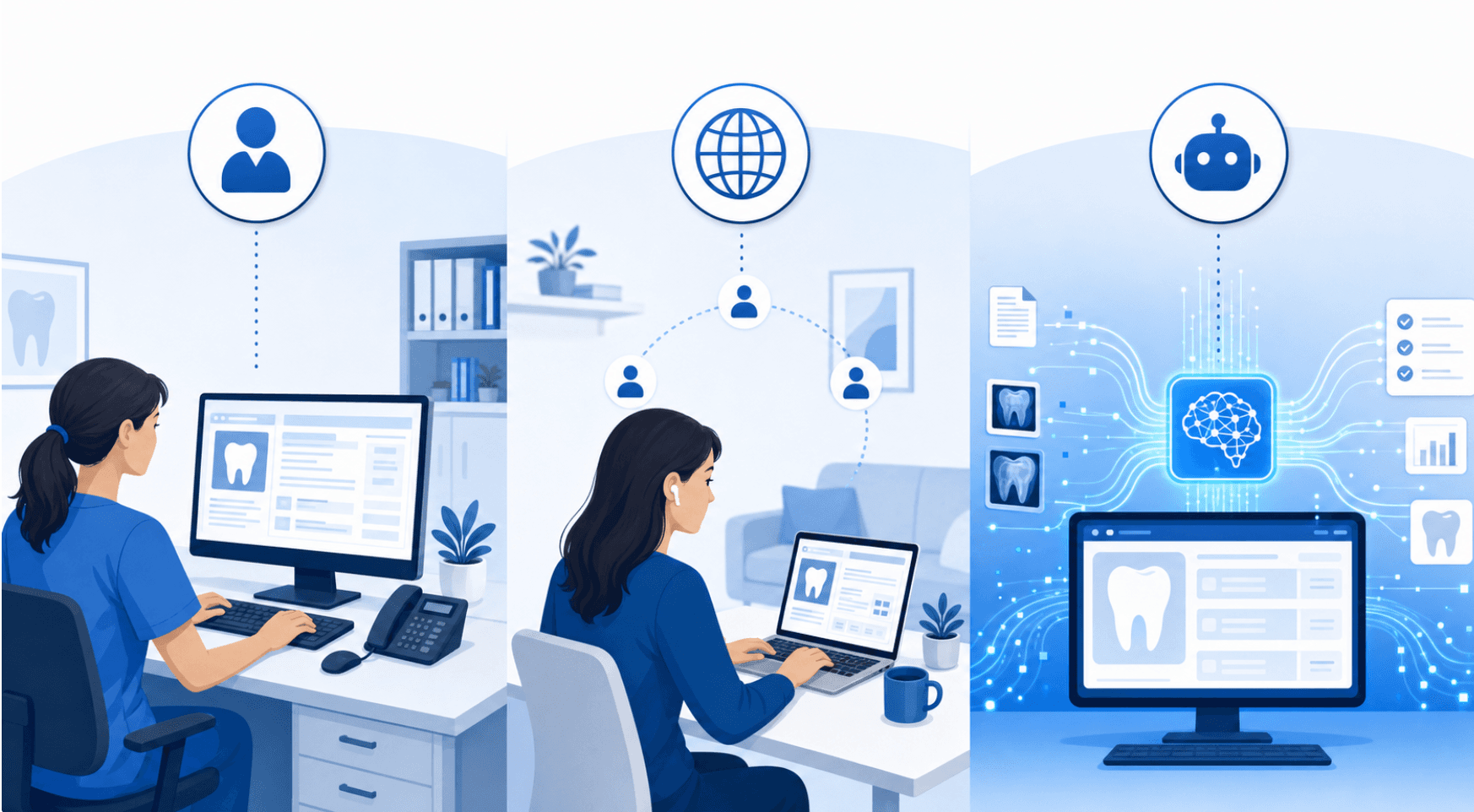
Everyone in your office knows the drill: treatments get completed, claims go out, and then you wait 30 to 60 days hoping the payer actually sends what they owe. In the meantime, someone has to pull EOBs, post every line item, match deposits to the bank, and flag the claims that came back short or didn't come back at all. For independent practices without a dedicated billing department, that workload crushes productivity and delays revenue.
Dental claim support (whether it's in-house staff, a remote team, or software automation) takes that entire cycle off your plate. We'll walk through how the workflow actually works, what to look for in a support service, how pricing and salary data typically break down across states, how providers stack up against each other, the remote job and cleanup options worth knowing about, and how to pick the right approach so you can stop chasing payers and start collecting faster.
TLDR:
- Dental claim support handles EOB retrieval, payment posting, and reconciliation for practices without corporate billing departments
- Claims over 90 days old drop to 15-25% collectability, costing practices $7.26 per statement in recovery attempts
- Practices choose between in-house staff, outsourced agencies, or software that posts directly into Dentrix, Eaglesoft, or Open Dental
- Accuracy beats speed in posting because misapplied payments trigger patient disputes and hide revenue leakage
- Lassie automates EOB posting into practice management systems, saving practices 80-100 hours monthly while increasing revenue 4-7%
What Dental Claim Support Is and Why It Matters for Independent Practices
Dental claim support covers every insurance payment workflow between a practice and its payers: pulling EOBs from payer portals, posting line-item payments, matching deposits to bank activity, flagging underpayments, and chasing unpaid claims. Some practices handle it in-house; others outsource to agencies or software vendors.
The work exists as its own category because insurance reimbursement is the largest revenue stream for most independent practices, and collecting it is paper-heavy and constant. For independent practices, it matters for three reasons:
- No corporate billing department exists, so the work falls on a small front-office team already juggling scheduling, patient calls, and treatment planning.
- Cash flow timing is tight, with a 30 to 60 day lag between treatment and reimbursement.
- Errors compound silently until an aging report surfaces five figures of stale balances.
The Revenue Cycle Bottleneck: How Insurance Posting Costs Practices Time and Money
The cost of slow posting hides inside line items most practices never track. According to Pearly, every billing statement a dental office mails runs about $7.26 per statement, before staff time, postage delays, or the follow-up statements when balances linger.
Time works against the practice. Once an account ages past 90 days, the odds of collecting fall sharply, so every week a payment stays unposted shrinks recoverable dollars.
The bottleneck is rarely one big failure. It is dozens of small ones stacking up:
- EOBs sitting in payer portals because no one had time to log in
- Deposits hitting the bank without matching line items posted in the PMS (practice management system)
- Underpayments going unflagged because the contracted rate was never checked
Insurance posting demands dedicated resources because the math punishes delay at every stage.
How Dental Claim Support Works: From EOB Retrieval to Payment Reconciliation
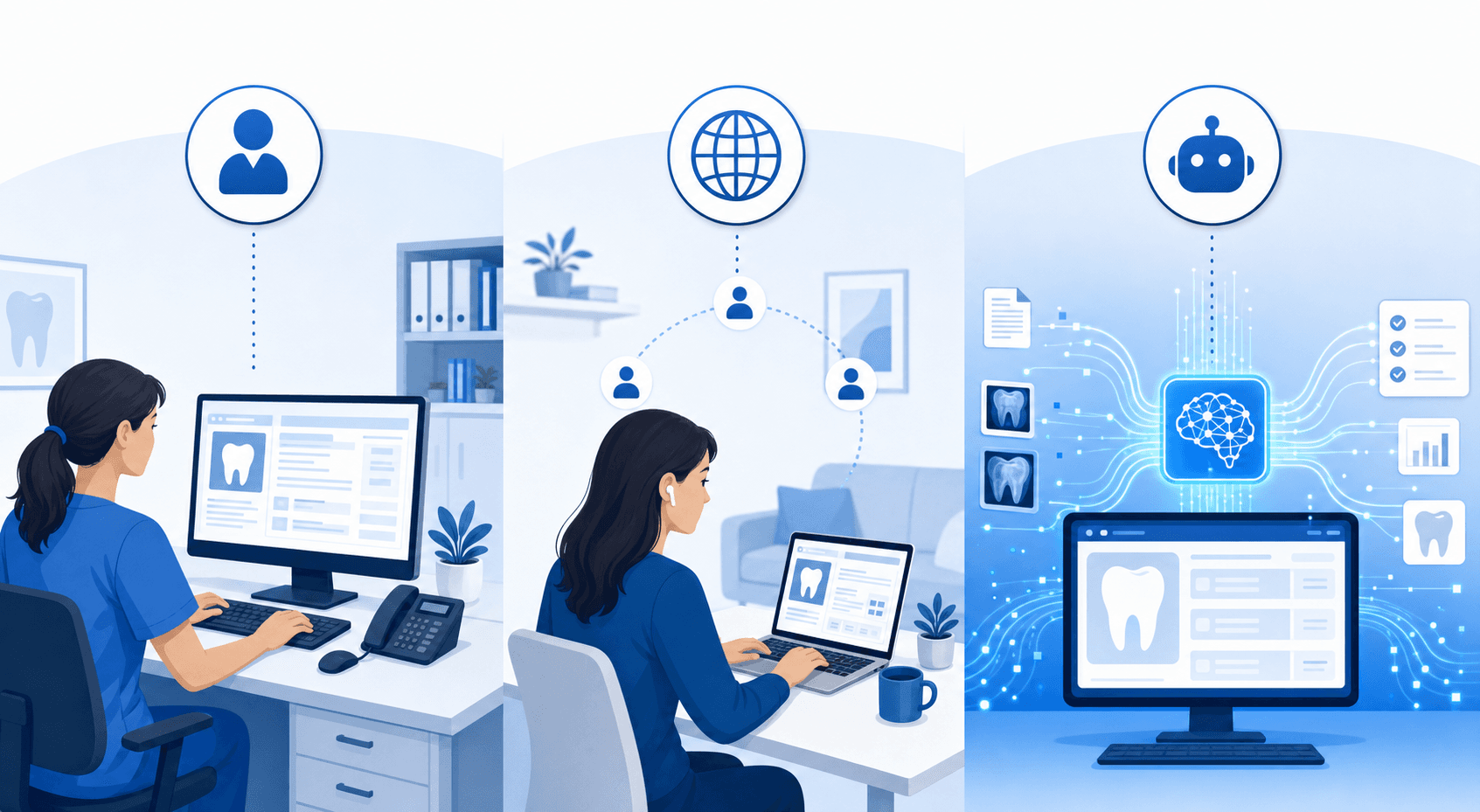
The workflow runs in five steps, each with its own failure points.
- Retrieval. Payers send payment notices two ways. Paper checks arrive with a printed EOB (Explanation of Benefits) attached. Electronic payments land as an EFT deposit paired with an ERA (Electronic Remittance Advice) file in the payer portal. Someone has to log into each portal and pull every ERA.
- Reading. EOBs list patient, procedure code, billed amount, allowed amount, insurance payment, patient responsibility, and denial codes. Each line must be matched back to the original claim.
- Posting. Every line gets entered into the PMS (Dentrix, Eaglesoft, Open Dental) against the correct patient ledger.
- Adjustments. Contractual write-offs reduce billed fees to the contracted rate; downgrades and denials get flagged for appeal.
- Reconciliation. Posted payments must match the bank deposit to the cent, or dollars sit in suspense.
In-House vs Outsourced vs Software: The Three Approaches to Dental Claim Support
Practices pick from four models that sit on a continuum from labor-heavy to software-heavy: in-house staff, offshore or domestic agencies, tech-powered billing services, and pure software automation.
| Approach | How it works | Tradeoffs |
| In-house staff | Front-office or dedicated biller posts EOBs manually | Full control and institutional knowledge, but capped by headcount and vulnerable to turnover |
| Offshore or domestic agencies | Remote teams log into the PMS and post on the practice's behalf | Lower hourly cost, but quality varies and oversight moves to the practice |
| Tech-powered billing services | Human billers backed by a dashboard layer | Faster reporting, though the underlying work is still manual |
| Pure software automation | AI retrieves, reads, and posts EOBs into the PMS | No human data entry, but narrower scope and limited flexibility for custom requests |
The right fit depends on claim volume, payer mix, and how much workflow a practice wants to keep in-house.
What to Look for When Choosing Dental Claim Support Services
When you put vendors side by side, the surface pitches blur together. The criteria below cut through that.
- PMS compatibility. Confirm the vendor posts directly into your system (Dentrix, Eaglesoft, Open Dental, Denticon) instead of handing back a spreadsheet for staff to key in.
- Payer coverage. Ask for the full carrier list, including Medicaid TPAs and regional Blues plans you depend on.
- Accuracy guarantees. Look for written error correction SLAs and a clear escalation path for misposts.
- Bank reconciliation. The service should match deposits to posted line items down to the cent.
- Reporting visibility. Aging dashboards, unpaid claim queues, and underpayment flags should be standard.
- Support channels. Phone, email, and chat with named contacts beats a generic ticket queue.
- Pricing structure. Weigh percentage-of-collections, per-claim, and flat-fee models against your monthly volume, and factor in setup fees.
Common Implementation Challenges and How Practices Overcome Them
Adoption stalls less often on price than on people. The barriers below are predictable, and each has a workable answer.
- Staff anxiety. Office managers and billers worry automation means redundancy. Positioning the change as augmentation, where staff shift from data entry to oversight and patient-facing tasks, defuses most resistance before go-live.
- Owner control. Practice owners are wary of handing out bank login credentials. Role-based access controls let staff see EOBs and posting tasks without exposing deposits or payroll.
- Workflow disruption. Going live across every payer at once invites chaos. A phased rollout, starting with a single carrier like Delta Dental, builds confidence before the rest gets switched over.
- Data migration. Legacy aging buckets rarely map cleanly, and old credit balances, write-offs entered against the wrong code, and duplicate patient ledgers all surface during cutover. Most practices clean up AR in parallel instead of mid-cutover, freezing the historical buckets and running new postings through the new workflow so the two never get tangled. Pulling a current aging report before go-live gives a baseline to measure against once the switch is complete.
- Learning curve. Staff need to learn where flagged items land, how to clear the human-review queue, and how to read the new reconciliation reports. Two weeks of shadowed posting, where a biller checks every automated entry against the EOB before approving it, usually closes the gap and builds enough trust to let the workflow run on its own.
Why Accuracy Matters More Than Speed in Insurance Posting
Speed is easy to brag about. Accuracy is what keeps the ledger trustworthy, and a fast posting workflow that drops decimals or misreads denial codes creates more work than it saves.
The downstream costs of a misposted EOB show up in four places:
- Patient balances. A wrong write-off or misapplied payment lands as an over-collection or surprise statement, triggering front-desk calls and eroding trust.
- Adjustments. A contractual write-off entered against the wrong code has to be reversed, reposted, and audited, doubling the labor the posting was meant to save.
- Bank reconciliation. When posted totals do not tie to the deposit, real revenue leakage and embezzlement risk both hide in the same variance.
- Reporting. Aging reports and collections dashboards built on bad postings give owners a distorted read on cash flow.
Verification workflows that flag uncertain line items for human review protect data integrity in a way throughput metrics never will.
How Lassie Automates the Full Dental Claim Support Workflow for Independent Practices
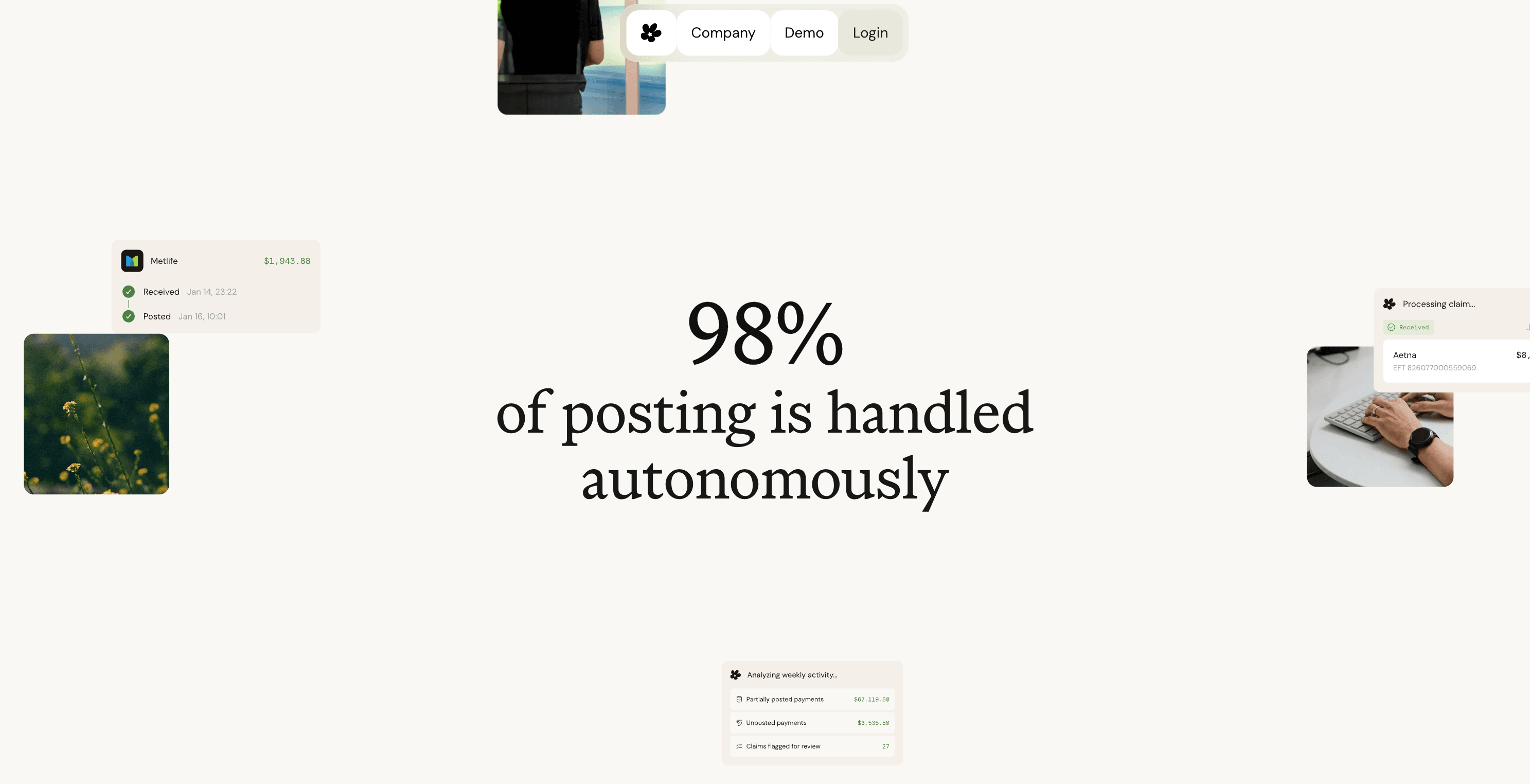
Lassie sits at the software end of the continuum mapped earlier. We retrieve, read, and post EOBs directly into Dentrix, Eaglesoft, and Open Dental without scanning, faxing, or manual data entry. The rules engine gets configured during onboarding to match how your office already handles write-offs, fluoride downgrades, and fee schedule mismatches, so the AI codifies your logic instead of imposing its own.
A few specifics worth calling out:
- Realtime bank reconciliation ties EFT and check deposits to posted line items, with anything off by a cent flagged for review.
- EOBs live in a searchable dashboard, retrievable by patient name in seconds.
- Uncertain postings get escalated to a human queue instead of being guessed.
According to Lassie's own customer data, practices reclaim 80-100 hours monthly and see an average of four to seven percent more revenue per month after implementation, covering the two percent posting fee.
Final Thoughts on Automating Dental Insurance Posting
Most practices lose money not because they bill incorrectly, but because payments sit unposted long enough to age past recovery. The model you choose matters less than whether it actually matches your deposits to your ledger every day. If your current process leaves gaps, you're already paying for a better one in write-offs and staff time. Book a demo to see how Lassie posts directly into your practice management system.
FAQ
Can I use dental claim support software if I run my practice on Dentrix or Eaglesoft?
Yes. Software-based dental claim support platforms like Lassie post directly into Dentrix, Eaglesoft, and Open Dental without requiring staff to manually enter data from spreadsheets or exports. Confirm PMS compatibility before committing to any vendor.
Dental claim support software vs offshore billing agencies: which works better for small practices?
Software automation delivers higher accuracy and removes embezzlement risk, but covers a narrower scope (posting and reconciliation only). Offshore agencies handle broader workflows like claims follow-up and verification, but quality depends on oversight and staff turnover. Choose based on whether you need end-to-end service or faster, error-free posting.
How long does it take to implement dental claim support automation?
Most practices complete setup in two to three weeks, including rule configuration and phased rollout by carrier. Starting with a single payer like Delta Dental lets you validate posting accuracy before expanding to your full payer mix.
What should I look for in dental claim support pricing?
Compare percentage-of-collections, per-claim, and flat-fee models against your monthly claim volume, and ask about setup fees upfront. A two percent posting fee on a practice collecting $50,000 monthly runs $1,000 per month, so weigh that against the labor hours saved and revenue recovered from faster posting.
Do dental claim support jobs require prior billing experience?
Most remote dental claims roles require one to two years of dental billing experience, familiarity with Dentrix or Eaglesoft, and knowledge of EOB posting workflows. Employers hiring for dental claim support careers often look for candidates who can read procedure codes and work through payer portals independently.