Best AI Tools for Reducing Dental Claim Denials in June 2026
Compare the best AI tools for reducing dental claim denials in June 2026. See which systems automate EOB posting, denial flagging, and reconciliation.
Max Shore - July 6, 2026
Your claims go out, two weeks pass, then you find out the narrative was missing, or the fee schedule didn't match, and now you're 30 days behind on a refile.
That cycle is exactly what AI tools to reduce dental claim denials are built to collapse. They check eligibility and coding before submission, pull EOBs from payer portals, post payments directly into your practice management system, and surface discrepancies in real time so your team can appeal while the data is current.
The question is: which AI dental claims software actually automates end-to-end dental claim denial management instead of handing the work back to a biller? Let's compare what's out there.
TLDR:
- Dental practices face 15 to 20% claim denial rates, mostly from coding errors and missing attachments
- AI tools automate EOB posting, bank reconciliation, and denial routing without human billers
- Most competitors only automate Open Dental; Dentrix and Eaglesoft still require manual posting
- Lassie automates posting across all three major PMS systems with real-time denial flagging
- Human-based billing services rely on offshore labor instead of software automation
What Are AI Tools for Reducing Dental Claim Denials?
AI tools for dental claim denial management are software systems that read, post, and reconcile insurance claim data without a human biller doing the keystrokes. They sit between your payers and your practice management system, catching errors before claims go out and flagging mismatches when EOBs return.
Traditional billing relies on staff or offshore agencies typing in payments and chasing refiles after the fact. AI moves that work upstream, validating fee schedules, spotting downgrades, routing denials into appeals queues, and matching deposits to the cent.
That matters because dental claim denial statistics show most practices have a 15 to 20% denial rate, and most denials stem from fixable issues like coding mistakes, missing attachments, eligibility gaps, or fee schedule misalignment.
In practice, these tools run several distinct functions that manual billing cannot match for speed or consistency:
- Pre-submission checks: the system cross-references procedure codes against the patient's active fee schedule and flags missing attachments or eligibility gaps before the claim leaves the office
- EOB retrieval and posting: software pulls remittances directly from payer portals and posts payments into the practice management system without a biller keying in figures manually
- Bank reconciliation: deposits are matched to posted payments to the cent, so discrepancies surface immediately instead of surfacing months later during an audit
- Denial routing: when a claim comes back short or rejected, the system categorizes the denial reason and queues it for appeal while the supporting data is still current
- Downgrade detection: payer substitutions, where a covered code is replaced with a lower-reimbursing one, are caught and flagged for review rather than accepted silently
The net result is that practices stop losing revenue to errors that were never caught and start appealing denials within days instead of weeks.
How We Ranked AI Tools for Reducing Dental Claim Denials
We looked at each tool through five lenses, weighted toward practices that want denial prevention baked into the software rather than bolted onto a staffing model.
- Degree of automation: how much posting and denial work happens without a human biller in the loop
- PMS integration depth: native support for Dentrix, Eaglesoft, and Open Dental
- Posting accuracy: cent-level matching against bank deposits and fee schedules
- Proactive denial prevention: eligibility checks, coding validation, attachment handling, and downgrade detection before claims go out
- Pricing transparency: clear setup fees, usage terms, and onboarding timelines
Tools that scored well on automation but relied on offshore teams to do the posting were demoted. Software that digitized manual work without removing it didn't make the cut.
Best Overall AI Tool for Reducing Dental Claim Denials: Lassie
Lassie is AI-native software that retrieves, reads, and posts EOBs directly into Dentrix, Eaglesoft, and Open Dental without a biller in the loop. When an EOB comes back short or incorrect, the system flags it in real time and routes the discrepancy to an appeals queue, instead of letting it sit in AR for 60 days.
Where Lassie pulls ahead
- Fully automated posting across all three major PMS systems, not only Open Dental
- Custom posting rules configured during onboarding, including downgrade routing and fee schedule mismatch halts
- Real-time bank reconciliation that catches cent-level errors before they bury a refile opportunity
- EFT enrollment included, removing paper checks and 3% virtual card fees that delay reimbursement
- Accuracy-first architecture that escalates ambiguous cases for human review
Good for: independent practices and groups running Dentrix, Eaglesoft, or Open Dental that want fully automated EOB posting and denial flagging without a biller in the workflow.
Limitation: not a fit for practices with heavy Medicaid volume routed through Skygen or Scion; claims submission is not included. Pricing is usage-based with a $3,000 per-location setup fee, billed annually.
Bottom line: the only AI-native option automating posting across all three major PMS systems with real-time bank reconciliation and denial routing built in.
Zentist
Zentist offers cloud-based revenue cycle software with Remit AI, which pulls EOB and ERA data from payer portals and posts payments through Open Dental's API. The Posting Automation module targets DSOs and multi-location groups that want API-level integration rather than human billers keying remittances.
What they offer
- Automated EOB and ERA retrieval from payer portals
- Payment posting via Open Dental API
- Denial filtering and categorization with resubmission data
- Claims turnaround is reported at around 6 days per company materials
Good for: DSOs running Open Dental who want posting handled through direct API integration.
Limitation: Posting automation is available only in Open Dental; Dentrix and Eaglesoft practices still depend on human billers for the posting step.
Bottom line: a strong fit for Open Dental DSOs wanting API-level automation, but practices on Dentrix or Eaglesoft still carry the labor costs and accuracy risks that AI software is meant to remove.
Medusind
Medusind runs full-service revenue cycle management for dental practices, pairing offshore staff with a 120-person tech team to handle eligibility, claims status, payment posting, and fee schedule upkeep.
What they offer
- Eligibility and benefits verification, claims status updates, and payment posting
- 96% clean claims rate per company-reported figures, backed by a 120-person tech team
- Insurance verification, A/R follow-up, and fee schedule maintenance
- Services delivered across 21 locations with 1,000 to 5,000 professionals
Good for: practices wanting fully outsourced RCM with human teams handling end-to-end billing.
Limitation: Medusind has faced data breaches and related class-action settlements, and the workflow relies on people rather than software, keeping practices dependent on offshore labor.
Bottom line: a full-service option for practices that prefer outsourced billing, but the human-driven model means labor costs and accuracy variability remain.
Dental Claim Support
Dental ClaimSupport positions itself as an extension of the practice team, handling insurance payment posting and unpaid claim research for dentists who want billing off their plate. The company was founded by people with direct dental insurance experience and has spent years refining manual collection processes.
What they offer
- Daily electronic claim submissions with supporting documentation and appeals defense
- Dental billing, pricing, credentialing, benefits administration, and revenue cycle management services
- HIPAA-compliant services with VPN-protected data access and no on-hardware storage
- 137% three-year growth recognized by Inc. 5000 in 2026
Good for: practices wanting outsourced billing specialists who understand dental workflows and can also handle credentialing and full RCM.
Limitation: Dental ClaimSupport relies on human billing teams, keeping practices dependent on manual labor rather than software-driven posting accuracy and denial prevention.
Bottom line: a solid pick for practices that need a hands-on billing team, but it doesn't remove the labor dependency or the accuracy variability that comes with manual posting.
Dentalrobot
Dentalrobot automates dental insurance verification by integrating with practice management systems to pull patient data and cross-check it against payer databases. It covers more than 12 PMS brands and applies pattern recognition to sharpen verification accuracy.
What they offer
- Real-time eligibility checks, automated pre-authorizations, and batch claim processing
- Automated workflows for treatment plans, appointments, verification, and revenue cycle management
- Integration with over 12 dental PMS brands
- Pattern recognition across claims data to improve verification accuracy
Good for: practices focused on front-end verification to prevent denials before submission.
Limitation: Dentalrobot focuses on verification and pre-authorization, so practices still need a separate system for EOB posting, reconciliation, and post-submission denial detection.
Bottom line: full denial reduction requires posting and appeals coverage too, which is where Lassie's end-to-end automation fits better.
Limitation: Dentalrobot focuses on verification and pre-authorization, so practices still need a separate system for EOB posting, reconciliation, and post-submission denial detection.
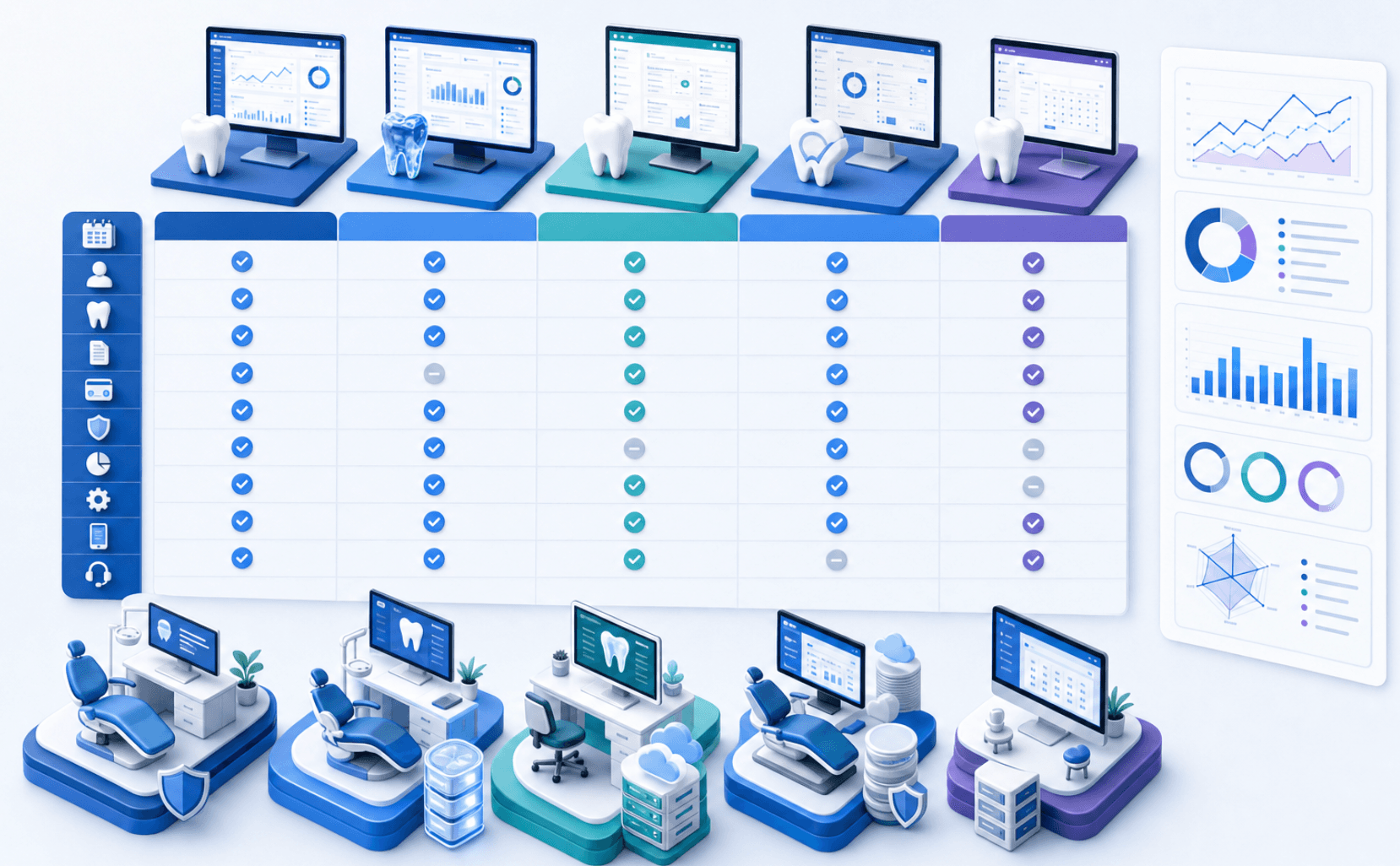
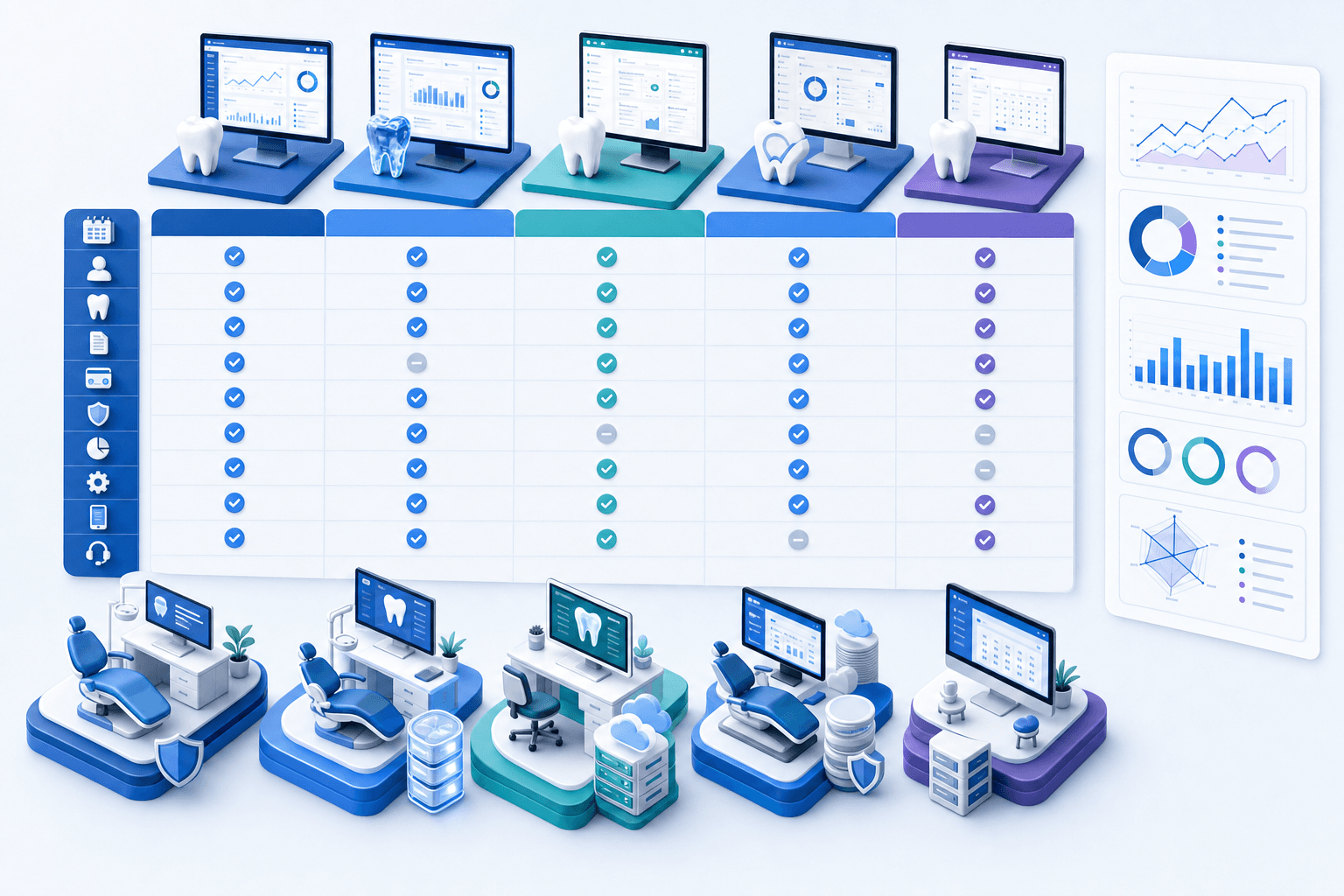
Feature Comparison Table of AI Dental Claim Denial Tools
| Feature | Lassie | Zentist | Medusind | Dental Claim Support | Dentalrobot |
| Automated EOB Posting (Dentrix) | Yes | No | No | No | No |
| Automated EOB Posting (Eaglesoft) | Yes | No | No | No | No |
| Automated EOB Posting (Open Dental) | Yes | Yes | No | No | No |
| AI-Native Automation | Yes | Partial | No | No | Yes |
| Real-Time Banking Reconciliation | Yes | No | No | No | No |
| Automated Denial Flagging | Yes | Yes | Yes | Yes | No |
| Insurance Verification Automation | Roadmap | Yes | Yes | Yes | Yes |
| Claims Submission | No | Yes | Yes | Yes | No |
| Human Billing Staff Required | No | Yes | Yes | Yes | No |
| EFT Enrollment Support | Yes | No | Yes | No | No |
Two patterns stand out. Lassie is the only option for automating EOB posting across all three major PMS systems, and the only one that pairs it with real-time banking reconciliation. The agencies cover more services end-to-end, but they do it with people, which is exactly the cost structure AI software is meant to collapse.
Why Lassie Is the Best AI Tool for Reducing Dental Claim Denials
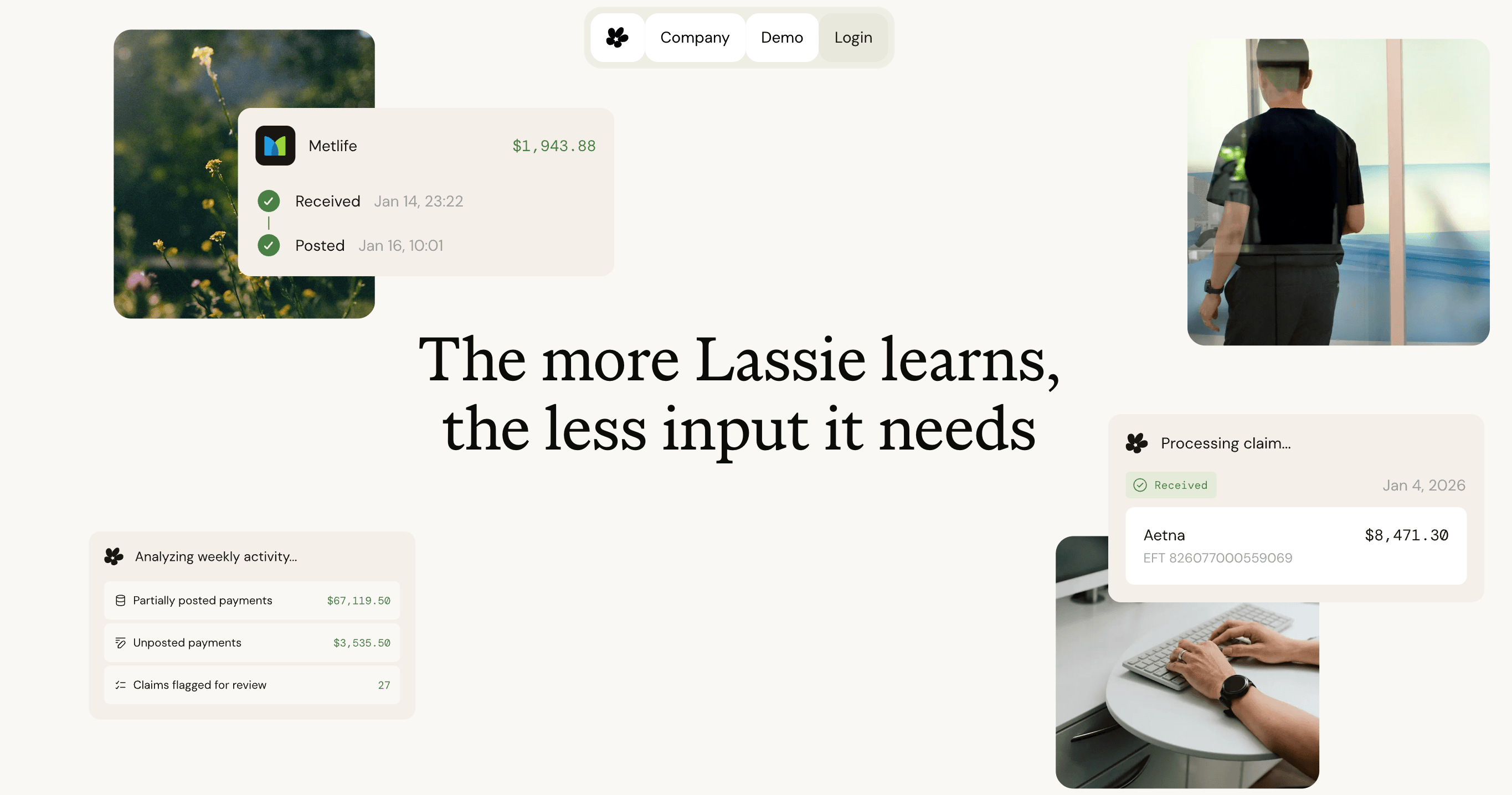
Lassie is the only AI-native option that fully automates EOB posting and reconciliation across Dentrix, Eaglesoft, and Open Dental with no manual data entry, no offshore staff, and no human sign-off required on each remittance. Denials surface within days because posting runs in real time, so practices can appeal while the issue is fresh instead of waiting out a 30 to 90-day review cycle.
Human-based billing services carry headcount limits, embezzlement risk, and posting variability that compounds over time. Competitors automating Open Dental still rely on people to handle Dentrix and Eaglesoft, which cover most independent practices. Our software approach maintains accuracy, removes labor dependency, and gives owners clear visibility into what is posted, what has been flagged, and what is queued for appeal.
Final Thoughts on AI for Dental Claim Denial Prevention
Denial reduction starts with automation that works across your PMS, beyond just one or two systems. If your software requires human billers to post Dentrix or Eaglesoft EOBs, you still bear the labor costs and accuracy risks that AI is supposed to eliminate. Real-time posting and bank reconciliation give you the visibility to appeal denials while they're fresh, which is how you turn a 15% denial rate into something closer to 4%.
Ready to see it in action? Book a demo with Lassie and see how automated EOB posting and reconciliation work across your PMS.
FAQ
Which dental claim denial tool works best for single-location practices versus DSOs?
Single-location practices running Dentrix or Eaglesoft need software that automates posting without human billers, which narrows the field to Lassie. DSOs on Open Dental can choose between Lassie and Zentist, though only Lassie automates posting across all three PMS systems if your group uses multiple platforms.
How do I choose between AI-native software and a billing agency for denial management?
Pick AI-native software if you want to remove human labor, avoid embezzlement risk, and pay for usage instead of headcount. Pick a billing agency if you need services beyond posting automation, such as insurance verification, claim submission, or aging follow-up that your team can't handle in-house.
Can I start with one insurance carrier to test posting accuracy before rolling out the full system?
Yes. Lassie supports phased rollout by carrier, so you can validate posting with Delta Dental or another high-volume payer before expanding. This staged approach lets you confirm accuracy and build staff confidence before automating your entire claims workflow.
What happens to my EOB data if I cancel an AI posting tool?
With Lassie, you keep full access to seven years of stored EOBs as searchable PDFs organized by patient and date of service. You'll need to manually download and upload them to your PMS if your practice requires EOBs stored in patient charts, since Lassie stores them in a centralized dashboard instead of your PMS.
When should I switch from my current billing setup to an AI tool for denials?
Switch if your practice spends more than 80 hours per month on manual posting and reconciliation (roughly two hours per working day per biller), waits 30-plus days for insurance reimbursements, or faces a 15 to 20% denial rate driven by coding errors and fee schedule mismatches that could be caught before submission.