CDT Codes Guide: ADA Dental Billing (June 2026)
Complete CDT codes guide for dental billing. Covers ADA procedure codes, 2026 updates, and proven strategies to cut claim denials. June 2026.
Max Shore - July 6, 2026
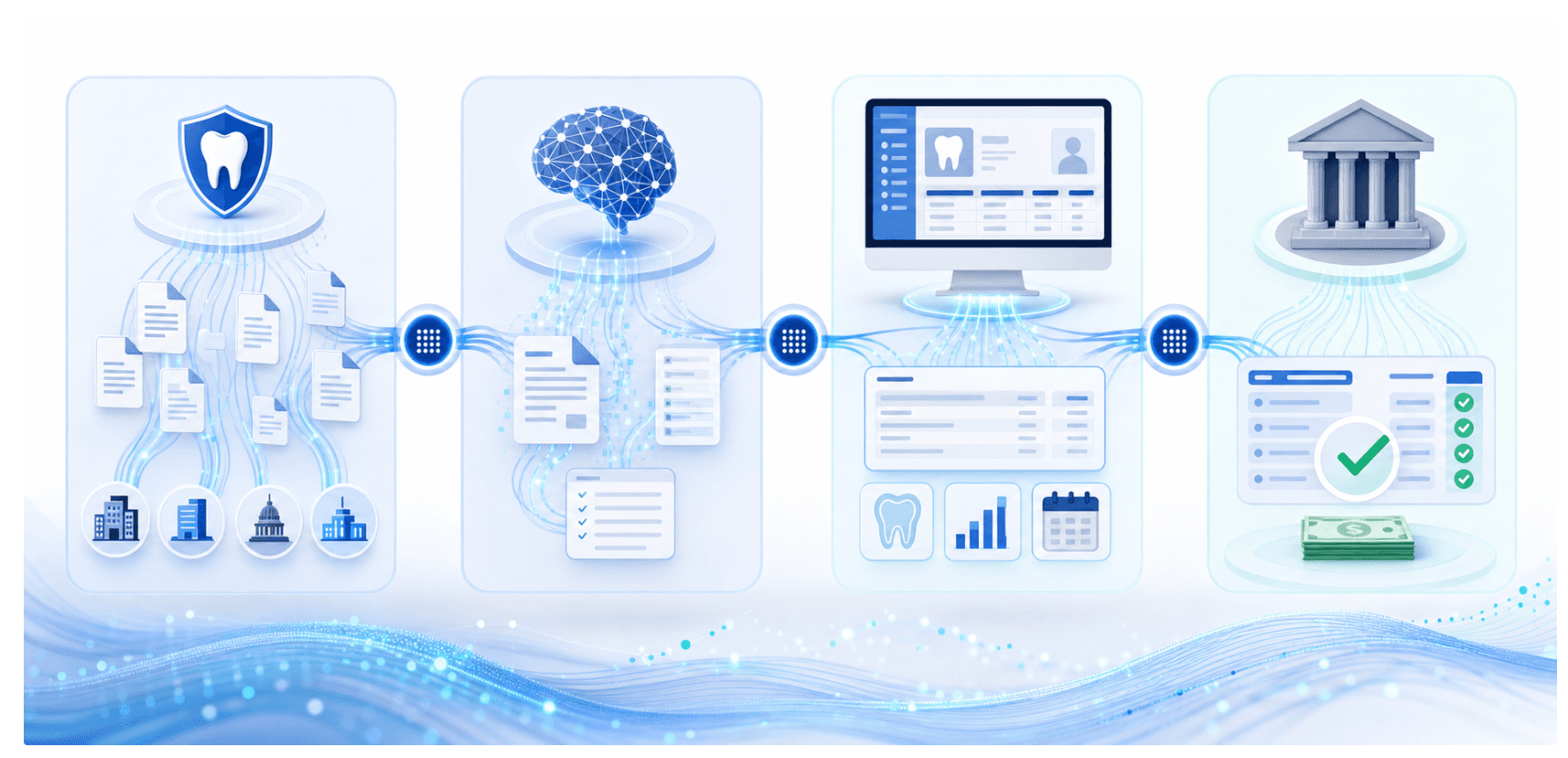
When you see a claim denial that says invalid procedure code and you're certain you billed it correctly, the problem usually traces back to using last year's ADA dental codes list on a current date of service, or mixing up which CDT codes dental apply to the procedure you actually performed versus what the clinical note says.
Your billing team is juggling the full list of dental codes carry-over entries, the new ADA dental codes 2026 pdf additions, cross-references to ICD-10 dental diagnosis codes list pdf for medical necessity cases, Delta Dental procedure codes lookup portals that expect exact matches, and the occasional oddball like D8693 dental code that only comes up once in a while but still needs to be right. On top of that, you're supposed to follow the ADA code of ethics pdf California edition if you're in that state, understand the 4 pillars of dental ethics when documenting treatment, know which code set is copyrighted by the American Dental Association versus open for use, and somehow keep a dental codes cheat sheet updated every January when the CDT 2026 current dental terminology updates drop with dozens of changes.
This guide walks through the complete structure of CDT codes, breaks down every category from preventive to oral surgery, explains the 60 updates in ADA codes 2026 including new codes for caries risk saliva testing and cracked tooth diagnostics, shows you when to use dental procedure codes lookup for CDT versus CPT for medical billing, covers the American Dental Association code of ethics principles like nonmaleficence and beneficence that govern accurate coding, and gives you the reference you need so basic dental codes and complex prosthodontic entries alike get billed correctly and paid without the endless denial loop.
TLDR:
- CDT codes are HIPAA-mandated alphanumeric codes (D + 4 digits) maintained by the ADA for dental billing.
- CDT 2026 added 31 codes and revised 14; billing with old codes on 2026 dates triggers denials.
- Accurate CDT coding cuts claim denials by 20-30% and prevents revenue loss from downgrades.
- CDT codes go on dental claims; CPT codes go on medical claims for TMJ, trauma, or sleep apnea work.
- Lassie reads EOB payment details by CDT code and posts them into your PMS to eliminate manual work.
What Are CDT Codes and Why They Matter for Dental Billing
Current Dental Terminology, known as CDT, is the standardized set of alphanumeric codes the American Dental Association maintains to describe dental procedures and services. Every cleaning, filling, crown, extraction, and consult has a code assigned to it, and that code is what travels from your operatory to the payer when a claim goes out.
The codes act as a shared vocabulary between the practice documenting treatment, the carrier deciding reimbursement, and the patient receiving a statement. Without it, claims stall.
CDT was designated a HIPAA standard code set in 2000, making its use mandatory on electronic and paper dental claims submitted to insurance payers. The ADA updates the set annually, and practices are expected to bill using the version in effect on the date of service.
How CDT Codes Are Structured and Organized
Every CDT code follows the same format: the letter D followed by four digits. The leading digit tells you the service category, giving you a fast way to get your bearings before pulling up the full description. A code starting with D2 is restorative, D3 is endodontics, D7 is oral surgery.
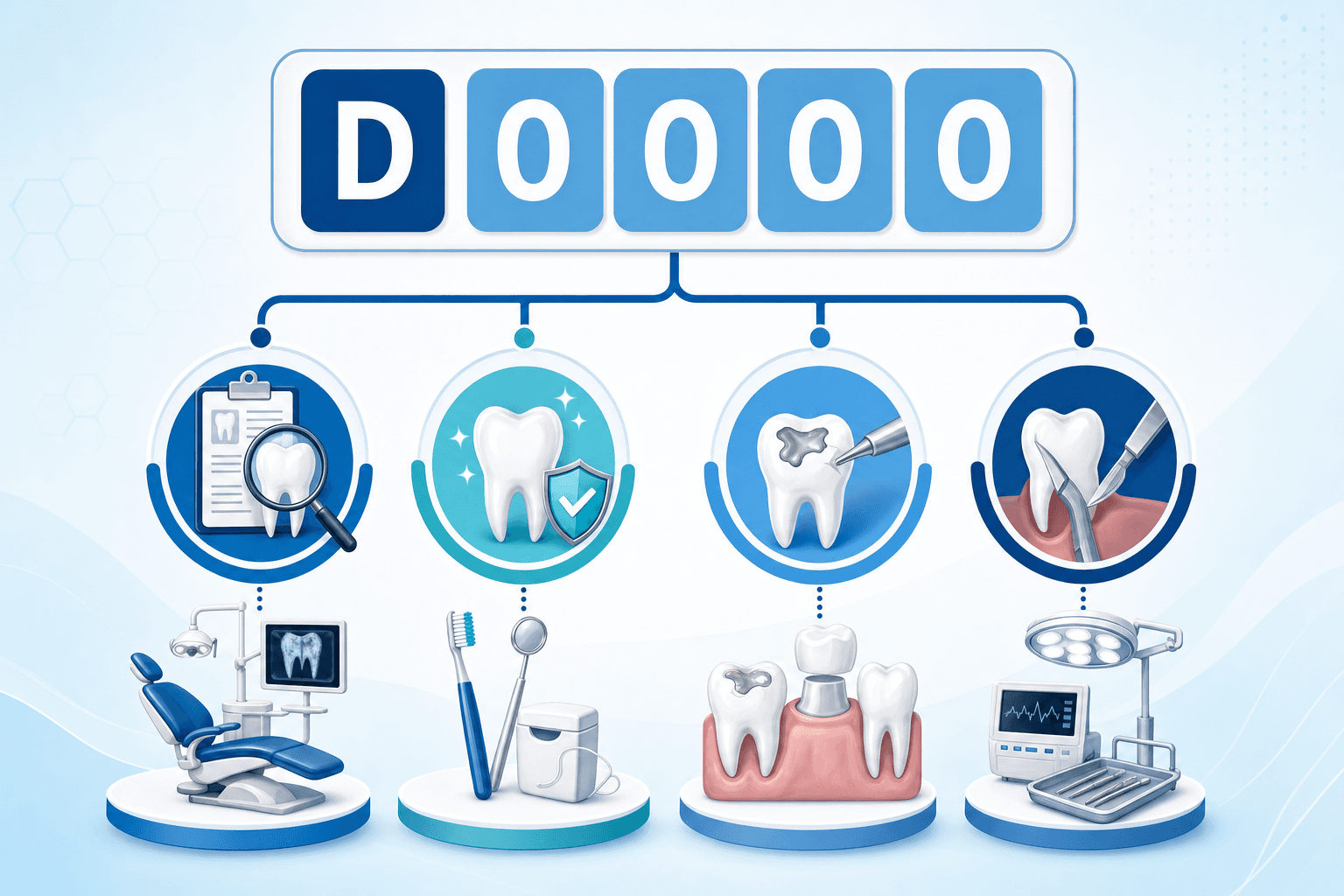
The ADA organizes CDT into 12 categories of service:
| Range | Category |
| D0100 to D0999 | Diagnostic |
| D1000 to D1999 | Preventive |
| D2000 to D2999 | Restorative |
| D3000 to D3999 | Endodontics |
| D4000 to D4999 | Periodontics |
| D5000 to D5899 | Prosthodontics, removable |
| D5900 to D5999 | Maxillofacial Prosthetics |
| D6000 to D6199 | Implant Services |
| D6200 to D6999 | Prosthodontics, fixed |
| D7000 to D7999 | Oral and Maxillofacial Surgery |
| D8000 to D8999 | Orthodontics |
| D9000 to D9999 | Adjunctive General Services |
So when you see D8693 on a claim, the D8 prefix tells you it falls under orthodontics before you read another word.
CDT 2026 Updates: New Codes, Revisions, and Deletions
CDT 2026 took effect on January 1, 2026, and brings 60 total changes to the code set. The breakdown:
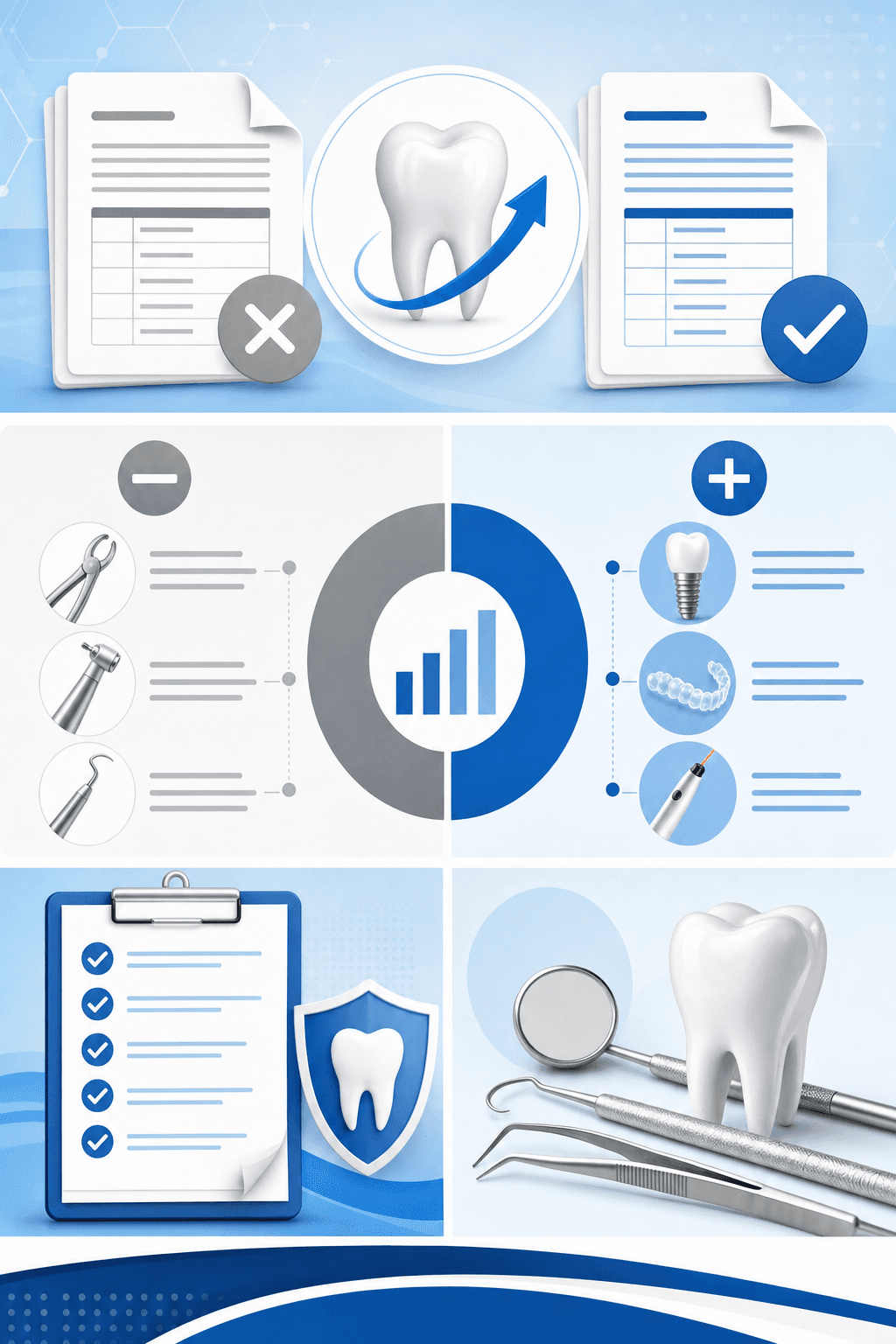
- 31 new codes
- 14 revisions
- 6 deletions
- 9 editorial changes
New additions reflect where clinical practice has moved: saliva testing for caries risk, cracked tooth diagnostics, duplicate denture fabrication, ongoing implant maintenance, and photobiomodulation therapy for soft tissue.
If your team is still billing with prior-year CDT codes on current dates of service, expect denials. Payers reference the version in effect on the date of service, and Delta Dental published guidance walking through the changes affecting adjudication this year.
Common CDT Codes Every Dental Practice Should Know
Most claims a typical practice files draw from a small subset of the full code set. Knowing the workhorses by heart speeds up front desk coding and cuts lookup time when EOBs come back for review.
Frequently used codes by category
The most common codes span diagnostics (D0120 for periodic exams, D0150 for complete evaluations, D0210 for full-mouth x-rays, D0274 for bitewings), preventive services (D1110/D1120 for adult and child prophylaxis, D1206 for fluoride varnish, D1351 for sealants), restorative work (D2140 for amalgam fillings, D2391 for composite fillings, D2740/D2750 for crowns, D2950 for core buildups), endodontics (D3220 for pulpotomy, D3310/D3330 for root canals), periodontics (D4341 for scaling and root planing, D4910 for perio maintenance), oral surgery (D7140/D7210/D7240 for extractions), and adjunctive services (D9230 for nitrous oxide). Pair each code with clinical notes. That alignment is the difference between a clean payment and a denial loop.
CDT vs CPT vs ICD-10: Understanding When to Use Each Code Set
Three code sets show up in dental billing, and confusing them is a fast way to land a denial. CDT codes (owned by the ADA) describe the procedure performed and live on dental claims sent to dental payers. ICD-10-CM codes (maintained by WHO and CMS) describe the diagnosis or medical necessity behind the procedure and answer the "why" on both dental and medical claims. CPT codes (owned by the AMA) describe procedures billed to medical insurance when a service has medical necessity beyond routine dental care.
For sleep apnea appliances, facial trauma repair, TMJ management, biopsies, and certain oral surgeries, bill medical insurance with a CPT code paired to an ICD-10 diagnosis. Routine restorative work stays on the dental side with CDT.
How Accurate CDT Coding Prevents Claim Denials and Revenue Loss
Coding errors hit the P&L in three places: outright denials, delayed reimbursements aging 60+ days, and silent underpayments where a downgrade slips through unappealed.
According to Prospa Billing's dental coding guide, accurate procedure coding can reduce claim denials by roughly 20 to 30 percent. The most common culprits behind preventable denials:
- Submitting deleted or superseded codes on a current date of service
- Mismatched codes and clinical documentation
- Wrong tooth number, surface, or quadrant designation
- Missing required attachments for procedures that need narratives or radiographs
Update your practice management software's code library every January when the new CDT version takes effect. A library still referencing prior-year entries will quietly generate denials no one traces back to the source.
The ADA Code of Ethics: Principles Guiding Professional Conduct
A quick pivot here, because the same three letters that govern billing codes also govern professional conduct. The ADA Code of Ethics is a separate document from CDT, and dentists carry obligations under both.
The Code has three interwoven components:
- Principles of Ethics, the aspirational goals of the profession
- Code of Professional Conduct, the enforceable rules
- Advisory Opinions, interpretations applied to real situations
Five fundamental principles sit underneath all of it:
- Patient autonomy, the right to self-determination
- Nonmaleficence, the duty to do no harm
- Beneficence, the duty to act for the patient's benefit
- Justice, fairness with patients and colleagues
- Veracity, truthfulness
The full text lives on the ADA's code of ethics page and is updated periodically by the Council on Ethics, Bylaws and Judicial Affairs.
How Lassie Automates CDT Code Posting to Eliminate Manual EOB Work
Every CDT code you bill returns as a line on an EOB, and someone has to match each line to the right entry in the patient ledger. That matching work is where manual reconciliation time hides each month.
We built Lassie to take that work off the desk. Our AI retrieves EOBs from payer portals, reads the payment detail for each CDT code, and posts results directly into Dentrix, Eaglesoft, or Open Dental.
Granular posting rules sit underneath the automation, so write-offs, contracted-rate adjustments, and procedure-specific logic (fluoride age limits, downgrade flagging, deductible handling) apply consistently to each CDT code. Every cent lands in the right place against the right procedure. Lassie practices see an average of 4 to 7 percent more revenue per month after implementation, a return that more than offsets the posting fee.
Final Thoughts on CDT Coding Accuracy and Revenue Protection
CDT codes control how fast your claims pay and whether they pay in full, so treating them as clerical details instead of revenue drivers is a costly mistake. Keeping your code library current with annual ADA updates and pairing every code to the matching clinical note cuts denial rates and shortens your A/R aging. When the manual posting work becomes the chokepoint, automation steps in to match each CDT code to the ledger so your team can close the books without the late nights. Book a Lassie demo to eliminate the reconciliation work your team currently does by hand.
FAQ
Can I download the ADA dental codes 2026 PDF for free?
No. The ADA holds copyright on CDT codes and sells the official manual through their online store. Unauthorized PDFs violate copyright, and using outdated code sets generates claim denials that cost more than the manual itself.
What's the difference between CDT codes and CPT codes for dental billing?
CDT codes go on dental claims to dental insurance, while CPT codes go on medical claims when a dental procedure has medical necessity (sleep apnea appliances, facial trauma, TMJ management, biopsies). Routine restorative work always uses CDT and stays on the dental side.
How do I look up dental procedure codes without buying the full manual?
Your practice management system includes a CDT code library that updates annually. Delta Dental and most major payers also publish lookup tools on their provider portals. For fast reference, print a one-page cheat sheet of the 20 to 30 codes your practice bills most often.
Why did my claim get denied if I used the right CDT code?
The code might be right, but the version might be wrong. Payers reject claims when the CDT version doesn't match the date of service; billing a 2025 code on a 2026 service generates an automatic denial. Mismatched documentation, wrong tooth numbers, and missing attachments also trigger rejections even when the base code is correct.
CDT codes vs ICD-10 codes for dental billing?
CDT describes what you did (the procedure), and ICD-10 describes why you did it (the diagnosis). Dental claims need both: the CDT code tells the payer which service to reimburse, and the ICD-10 code medical necessity. Submit one without the other and the claim stalls.